Hormone replacement therapy in menopause: what it is, when it is recommended, risks and how to start
Written by Dr Cristina Lenzi
Hormone replacement therapy (HRT) gives the body back the hormones that the ovaries stop producing at menopause. The foundation is oestrogen; if you still have a uterus, progesterone or a progestin is added. The therapy helps to eliminate the symptoms of menopause, or to ease them when they are very severe. It also contributes to protecting bones, heart and brain over time, although it is worth remembering that it is not a therapy to take for that purpose alone. It is started only if the individual woman's personal profile requires and justifies it. The hormones used can be synthetic or bioidentical, two different types of molecule used to reach the same goal.
For more than twenty years, hormone therapy has been a source of fear, above all because of breast cancer. That fear comes largely from a major American study dating from 2002. The study used only one type of therapy, with hormones different from those of the body, taken by mouth, but its results were extended for years to every kind of hormone therapy. Here you will find what we know today, risk by risk, and for which type of hormones.
Would you like to talk it through with a doctor?
The first consultation is free, also by video call.
Book a free consultationWhat is hormone replacement therapy (HRT)?
With menopause, the ovaries almost completely stop producing oestrogen and progesterone. Hormone replacement therapy gives these hormones back to the body, in the doses each woman needs.
The foundation is oestrogen. If you still have a uterus, the oestrogen is combined with progesterone or a progestin to protect the endometrium, the inner lining of the uterus: with oestrogen alone it would thicken. Progesterone, however, is not only for the uterus: it also acts on sleep, bones and the thyroid, and for this reason it can be useful even when the uterus is no longer there.
Therapy can be systemic or local. Systemic therapy carries the hormones into the blood and acts on the whole body: it is taken by mouth, as tablets or capsules, or applied to the skin, as patches, gels or creams. Local therapy is applied in the vagina, as creams or pessaries, and acts mainly on genital and urinary problems.
This is how the two types of hormones differ:
- Synthetic. These are the hormones of conventional therapy, with a structure different from that of the hormones the body produces. This is the case with synthetic progestins and conjugated equine oestrogens, the latter being of animal origin and also containing oestrogens that a woman's body does not produce.
- Bioidentical. Bioidentical hormones have the same chemical structure as those produced by the body, such as estradiol and micronised progesterone. They are obtained from substances found in plants such as dioscorea (wild yam), sweet potato and soya, and are transformed in the laboratory: so they are not “natural” in the sense of being produced by the plant.
What do HRT, TOS and TOI mean?
- HRT stands for hormone replacement therapy. In Italian it is terapia ormonale sostitutiva, or TOS.
- MHT, or menopausal hormone therapy, is the name now used in many medical texts.
- BHRT stands for bioidentical hormone replacement therapy, that is, therapy with bioidentical hormones.
- TOI stands for terapia ormonale integrativa (“integrative hormone therapy”), the Italian name I use for bioidentical hormone therapy (BHRT). I think it is a more accurate name: a molecule the body already knows is supplemented, not replaced, as happens instead when a synthetic molecule, similar but different, is used in place of one of the body's own hormones.
How does hormone therapy change the body?
Oestrogens do not act only on the reproductive system, but on many tissues: the brain, bones, blood vessels and joints. This is why their decline is felt throughout the body, and why the therapy acts on several fronts.
- Hot flushes, night sweats and sleep. Hot flushes begin in the brain, in the area that regulates body temperature. As oestrogen falls, this “thermostat” becomes more sensitive, and it takes very little to set off a hot flush. Restoring hormonal balance helps to eliminate hot flushes, night sweats, tachycardia, tiredness, insomnia, tinnitus, mood swings and irregular periods, or to ease them when they are very severe.
- Mucous membranes. The fall in oestrogen thins the vaginal lining: the result is dryness, pain during sex and urinary infections that keep coming back. Hormone therapy can reduce these problems. The same fall can also dry the eyes, mouth and bowel, and restoring hormonal balance can improve dryness throughout the body.
- Joints. The joint pain and morning stiffness that appear in perimenopause and menopause are often linked to the fall in oestrogen, which helps to keep hydrated the points where the tendons attach to the bone. The pain often moves from one joint to another and is felt mostly at night, with a stiffness that eases with movement. Restoring hormonal balance can make the pain subside. If your joints swell, or morning stiffness lasts for longer than 30 to 60 minutes, it is advisable to see a rheumatologist.
- Bones. Without hormones, the cells that break down bone are more active than those that build it, and the bone weakens. Hormone therapy has been associated with a reduction in fractures of more than 20%.
- Heart and blood vessels. Hormones protect the inner wall of the blood vessels, and hormone therapy helps to protect the organs, including the heart and blood vessels. If it is started in the so-called “window of opportunity”, that is, within about 10 years of menopause or before the age of 60, the risk of coronary artery disease, which affects the arteries that supply the heart, can fall by almost half.
- Brain and mood. Started within the window of opportunity, the therapy can help to protect against Alzheimer's disease, depression and problems with memory and concentration. In perimenopausal women, therapy with estradiol on the skin and micronised progesterone seems to halve the risk of depressive symptoms.
- Sexual desire and muscles. Testosterone is not only a male hormone: in women it helps to maintain bone and muscle mass. When it is indicated, testosterone therapy helps to regain sexual desire.
As well as acting on symptoms, the therapy therefore also has a preventive role: it contributes to the long-term protection of bones, heart and brain.
Does hormone therapy change blood sugar, cholesterol and weight?
Hormone therapy with oestrogen and progestins has been associated with a reduction of about 20% in new cases of type 2 diabetes.
- Cholesterol. Oestrogen lowers LDL cholesterol, the “bad” kind; a little less so when a progestin is also present.
- Triglycerides. Oestrogen taken by mouth raises them; oestrogen on the skin does not.
- Blood pressure. It does not change appreciably, either with oestrogen by mouth or with oestrogen on the skin.
- Weight. It is not a weight-loss therapy, although it is associated with a little less abdominal fat.
Menopause too, on its own, changes the metabolism: in menopause, fat tends to shift to the abdomen and cholesterol rises, without causing symptoms.
What are the side effects of HRT?
Among the most common side effects of hormone therapy are bloating, breast tenderness, headaches and light bleeding. They depend mostly on the oestrogen, while the progestin can cause a bloated belly and some fluid retention. The dose matters too: higher doses can be more effective, but cause more side effects.
Bioidentical hormones, at physiological doses, can be better tolerated than the old synthetic regimens taken by mouth: they are identical to those of the body, and the route and dose are chosen for each individual woman. Micronised progesterone generally does not cause any particular side effects, which have instead sometimes been associated with synthetic progestins.
With bioidentical hormone therapy, side effects are generally limited to cases of overdose: hair loss, oily skin and other signs of an excess of androgens, the male hormones. This is corrected by reducing the dose. That is why treatment starts at a low dose, which is raised gradually until the lowest dose that works is reached. In the first weeks, breast tenderness can be the body adjusting; if it continues, together with bloating, it can be a sign of too high a dose, and in this case too it is corrected by reducing it.
At the start of therapy, light bleeding can appear, and in some women periods can return even after years: it is the response of the endometrium to the hormones. If the bleeding lasts for more than a week or is heavy, it is essential to have a gynaecological check-up to find out what is causing it. In the first months of bioidentical hormone therapy, the dose is adjusted to your symptoms, follow-up after follow-up.
What happens if you do not have hormone therapy, and can you get through menopause without it?
Menopause is a natural phase of life, but you do not have to feel unwell: the symptoms can be treated, not just put up with.
Symptoms vary a great deal from woman to woman, partly because some women keep producing a small amount of hormones between perimenopause and menopause. Some have symptoms so severe that they bring everyday life to a standstill, and others barely notice anything. Without therapy, symptoms run their course: in one in two women, frequent hot flushes last for more than 7 years.
There is, however, one thing that applies to every woman, even those without symptoms: as hormones fall, the protection they gave to the organs is lost.
- Bones. Osteoporosis gives no signs or symptoms and, if you do not look for it, you find out about it only with a fracture. This is why bone health should be assessed right from the start of menopause.
- Heart and blood vessels. Until menopause, women are protected by their hormones; afterwards, cardiovascular disease affects them even more than it does men.
- Brain. Oestrogen also helps to protect the brain. Started in the “window of opportunity”, that is, within about 10 years of menopause or before the age of 60, the therapy can help to protect against Alzheimer's disease and depression.
- Thyroid. The fall in sex hormones can slow the work of the thyroid, and with it the metabolism, even when thyroid tests are within normal limits.
- Metabolism. Around menopause there is a tendency to put on weight, especially around the abdomen, and cholesterol, blood sugar and blood pressure can rise without causing symptoms.
This is why it is worth talking to a doctor who knows hormone therapy well, even when symptoms are mild: it is the way to understand how to protect yourself. In the Bioidentical Hormone Pathway, this is exactly where we start: with hormone tests and a visit in which the doctor assesses your profile and your medical history.
What is the best hormone therapy for menopause?
There is no single best therapy for everyone: the best one is the one built on the individual woman's profile, that is, on her symptoms, her tests and her medical history. There are more than 200 different hormone therapies, and risks and benefits change with the molecule, the dose, the route and the time at which you start. To help you find your bearings, there are three differences that matter, starting with the most important.
The molecule: synthetic or bioidentical. This is the main difference. Conventional HRT generally uses synthetic hormones, with a structure different from that of the body's own hormones. Bioidentical therapy uses molecules identical to those the body used to produce, such as estradiol and micronised progesterone. The difference between synthetic HRT and bioidentical hormones shows up in four ways:
- The breast. Oestrogen with micronised progesterone is not associated with an increased risk of breast cancer; with a synthetic progestin it is.
- Thrombosis. Micronised progesterone is not associated with a higher risk of thrombosis, unlike some synthetic progestins. For oestrogen, what matters most is the route, by mouth or on the skin.
- Side effects. At physiological doses, bioidentical hormones can be better tolerated than the old synthetic regimens taken by mouth.
- Duration. Synthetic therapy is generally taken for 3–5 years, because after 5 years the risk of breast cancer linked to synthetic progestins increases. With bioidentical hormones there is no expiry date: the duration is decided over time together with your doctor.
The preparation: industrial medicine or compounded preparation. The second difference concerns how the therapy is prepared. Bioidentical hormones also exist as industrial medicines, registered at fixed doses: estradiol as a patch or gel, micronised progesterone as capsules. An industrial medicine can work perfectly well, if one of its doses is the right one for you; the limit is that you can only choose among the doses available. A compounded preparation, on the other hand, is made by the pharmacist on the doctor's prescription, for one patient only: all the hormones that are needed can be used, each in its own dose. It is the way to personalise the therapy 100% and avoid the side effects of a therapy that does not suit the individual woman: doses that are too high or too low, or the lack of a hormone she needs.
Scientific societies recommend preferring industrial medicines, because compounded preparations have been studied less. In Italy, however, compounded preparations follow the Norme di Buona Preparazione (Good Preparation Practice) of the Farmacopea Ufficiale (the Italian Official Pharmacopoeia), and pharmacy laboratories are inspected by the ASL (the local health authorities) and the NAS (the Carabinieri's health protection unit): each cream of compounded bioidentical hormones is prepared one at a time, and the pharmacist weighs each hormone, so the dose is the one prescribed. There is no patient information leaflet: the doctor who prescribes it and the pharmacist who prepares it explain its indications, contraindications and side effects to you.
The route: by mouth or on the skin. Oestrogen taken by mouth passes through the liver before entering the circulation; oestrogen applied to the skin, with a patch, gel or cream, skips this step. For this reason, the skin route, at usual doses, is not associated with an increased risk of thrombosis. When there are no particular contraindications, it is our first choice at Medyca.
I say it often: synthetic or bioidentical, the important thing is to protect yourself and age in full wellbeing.
When is HRT recommended, and how late can you start it?
Hormone therapy is assessed for every woman in menopause, and is started only if her personal profile requires and justifies it. It can be started at any age. The greatest benefit is obtained by starting in the so-called “window of opportunity”, that is, within about 10 years of menopause or before the age of 60. Those who start later can also benefit from bioidentical hormone therapy, but the balance between benefits and risks, especially for the heart and brain, may be less favourable.
In early menopause and in menopause caused by surgery, the protection that hormones give matters even more, because it is lost many years earlier: therapy should be assessed straight away and, after an operation, as soon as possible. When menopause arrives before the age of 40, it is recommended to continue therapy at least until the age of natural menopause, if there are no contraindications.
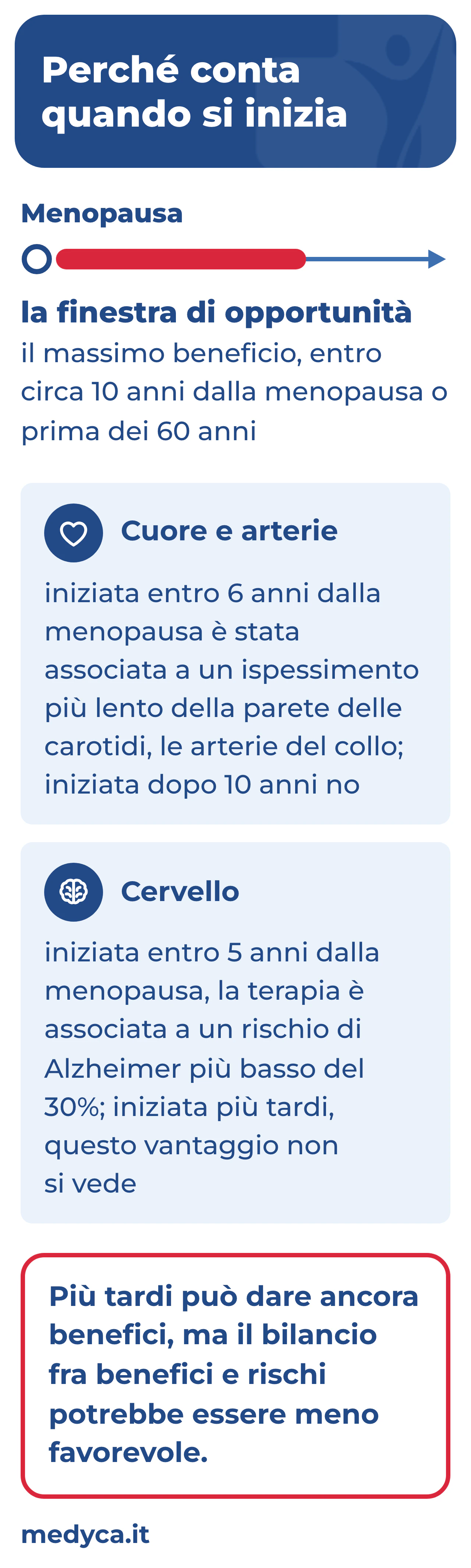
Why it matters when you start:
- Heart and arteries. Started early, the therapy can help to protect against atherosclerosis, the hardening of the arteries: started within 6 years of menopause, it has been associated with slower thickening of the wall of the carotid arteries, the arteries of the neck, whereas started after 10 years it has not.
- Brain. Started within 5 years of menopause, the therapy is associated with a 30% lower risk of Alzheimer's disease; started later, this advantage is not seen.
When is HRT not recommended?
Hormone therapy is not recommended in cases of:
- vaginal bleeding of unknown cause;
- current deep vein thrombosis or pulmonary embolism;
- current severe liver disease;
- recent heart attack, stroke or other cardiovascular events;
- active cancer;
- known inherited thrombophilia, that is, a tendency of the blood to form clots.
With bioidentical therapy on the skin, these conditions, except for an active cancer, can be assessed case by case.
If you have had cancer, therapy can be considered when the disease has been stable for at least 12 months. It is not automatic: the decision always rests with the doctor, together with the specialist who has been following you.
How long can you take hormone therapy for?
For synthetic hormone therapy the limit is generally 3–5 years, because after 5 years the risk of breast cancer linked to synthetic progestins increases.
With bioidentical hormones there is no expiry date: the duration is decided over time, together with your doctor, on the basis of follow-up checks. Estradiol and micronised progesterone have not been associated with an increased risk of breast cancer. At physiological doses, they are the same hormones that the body has had in circulation throughout its fertile life.
How do you stop hormone therapy, and what happens afterwards?
Stopping is a decision made with your doctor, on the basis of follow-up checks. You can reduce the dose gradually or stop the therapy straight away: both approaches are fine. Reducing it gradually can make the return of symptoms milder in the first months.
After stopping, the body returns to the situation it was in before the therapy:
- symptoms can come back: hot flushes, for example, return in about half of women;
- the protection that hormones gave the bone is lost within about a year. For this reason, if you have osteoporosis, your doctor will suggest other treatments to keep protecting your bones.
What are the risks of HRT?
The risks of hormone therapy depend on the type of hormones and, for thrombosis and stroke, also on the route and the dose. The two most talked about are breast cancer and thrombosis.
The fear of hormone therapy comes largely from a major American study dating from 2002, which used conjugated equine oestrogens taken by mouth, alone or with a synthetic progestin. Its result was for years generalised to every hormone therapy: from there arose an alarmism that went well beyond the available data. Later studies then showed that hormone therapy is not associated with an increase in mortality, either from heart disease or from cancer.
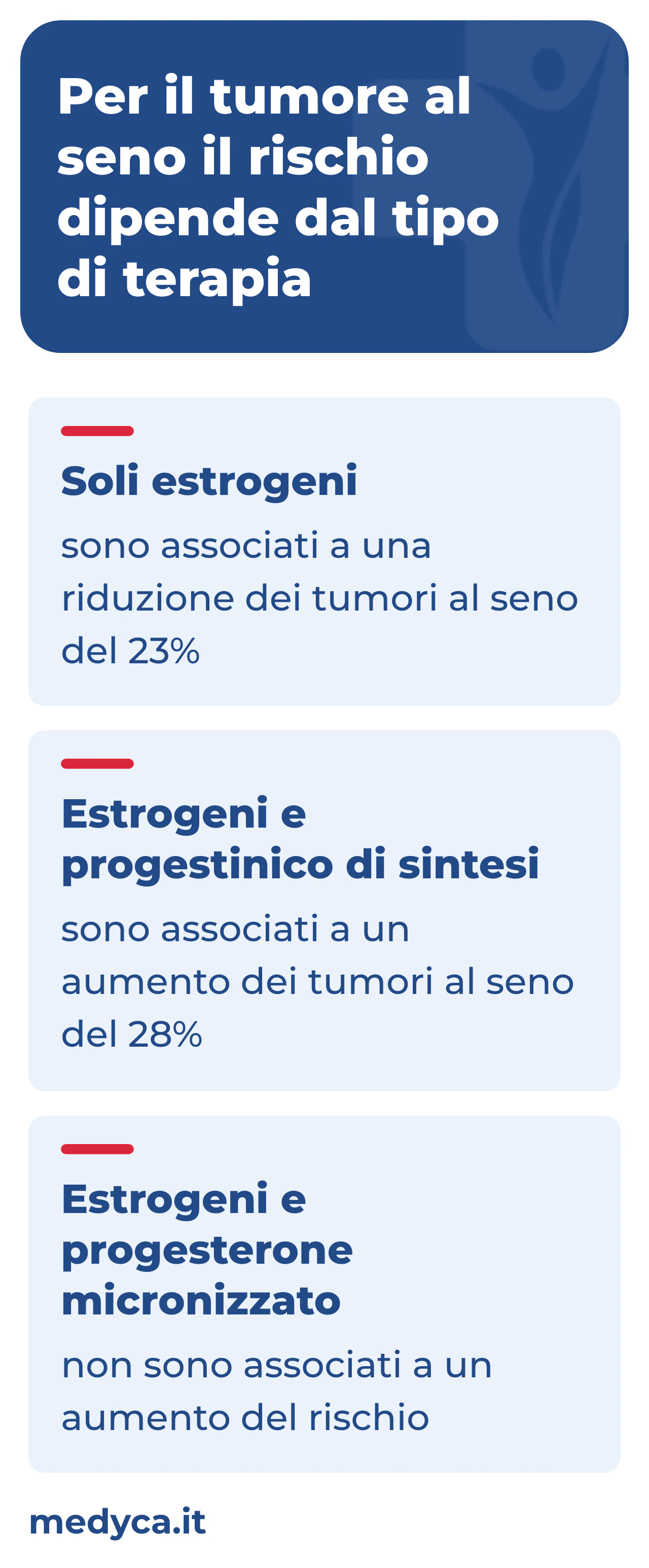
The risk of breast cancer depends on the type of therapy:
- Oestrogen alone: associated with a 23% reduction in breast cancers.
- Oestrogen and a synthetic progestin: associated with a 28% increase in breast cancers.
- Oestrogen and micronised progesterone: not associated with an increased risk.
Testosterone. Testosterone on the skin, at physiological doses, is not associated in the short term with an increase in breast density on mammography or in the risk of breast cancer. The therapy nonetheless includes regular check-ups.
The American decision. In November 2025 the Food and Drug Administration (FDA), the medicines agency of the United States, began removing from American patient information leaflets the generic warning about the risk of heart disease, breast cancer and dementia. In Italy, as of October 2026, the patient information leaflets do not appear to have changed.
Thrombosis and stroke: does a patch or a pill make a difference?
Yes. With oestrogen by mouth the risk of venous thrombosis is about two and a half times that of someone who does not use it, whereas with oestrogen on the skin it does not increase significantly. The reason is that the skin route bypasses the liver. The progestin matters too: micronised progesterone is not associated with a higher risk of thrombosis, unlike some synthetic progestins.
For stroke, the route and the dose matter: oestrogen by mouth is associated with a 28% higher risk, whereas low-dose patches are not associated with an increase; high-dose ones are. This is also why I always start from a low dose and raise it gradually according to how each patient's body responds: that way you never reach an excessive dose but can still get rid of the symptoms. If you suffer from migraine, especially with aura, the skin route is better, as it gives more stable oestrogen levels.
In summary:
| Risk | Oestrogen by mouth, alone or with a progestin | Oestrogen on the skin |
|---|---|---|
| Venous thrombosis | about 2.5 times the risk of those who do not use it | no significant increase |
| Stroke | +28% compared with those who do not use it | no increase with patches of up to 50 micrograms of oestrogen, an increase with those above 50 micrograms |
Which hormones are used in hormone therapy for menopause?
The combination depends first of all on the uterus: if it is present, progesterone or a progestin is combined with the oestrogen. When needed, testosterone and DHEA (dehydroepiandrosterone) can be added, and for genital and urinary problems there are also local therapies.
- Oestrogens. The main one is estradiol, the same oestrogen that the ovaries produce in the fertile years: it is used both in industrial medicines and in compounded preparations. Estriol is a weaker oestrogen, used mainly in the vagina against dryness and urinary problems. Conjugated equine oestrogens, on the other hand, are a mixture obtained from the urine of pregnant mares, which also contains oestrogens that a woman's body does not produce.
- Progesterone and progestins. If you have a uterus, progesterone balances the effect of oestrogen on the endometrium; it also acts on sleep, bones and the thyroid, and for this reason it can be useful even when the uterus is no longer there. You can use micronised progesterone, identical to that produced by the body, or a synthetic progestin, such as medroxyprogesterone acetate or norethisterone. The choice matters: added to oestrogen, micronised progesterone is not associated with an increased risk of breast cancer or of thrombosis, whereas synthetic progestins are associated with more breast cancers and, some of them, with more thromboses. Micronised progesterone also generally does not cause any particular side effects.
- Testosterone. Testosterone also has an important role in women's therapy: the starting dose is set on the basis of blood tests and then raised gradually. In Italy there is no registered product for women: when it is indicated, the doctor can prescribe it as a compounded preparation, which the law allows.
- DHEA. This is the hormone from which a woman's tissues make, within themselves, the oestrogens and testosterone they need: after menopause it becomes their main source. Its levels fall with age, and this fall contributes to the problems of menopause. Everything starts from cholesterol, the starting material from which the body builds all these hormones: cholesterol targets are set by the doctor on the basis of cardiovascular risk, so as to find the right balance, neither too low nor too high.
- Other molecules. Among the medicines registered in Italy there are also tibolone and the combination of conjugated equine oestrogens and bazedoxifene.
Hormones are taken by mouth, applied to the skin or used in the vagina, in local therapy. At the pharmacy you can find both bioidentical hormones with a brand name, registered at a fixed dose, and compounded preparations, made by the pharmacist on prescription.
How do you start HRT, and which tests do you need?

It starts with a medical visit. Any doctor can prescribe hormone therapy: what matters is that they know it well and follow you over time. Visits, tests and preparation each have their own price, and the cost of bioidentical hormone therapy is the sum of these items.
After the age of 45, blood tests are not needed to recognise menopause: symptoms and the pattern of your periods are enough. The tests I ask for before therapy serve a different purpose: to build the therapy around your hormonal profile. At the visit I also assess the thyroid, because the fall in sex hormones can slow it down even when thyroid tests are within normal limits.
The Bioidentical Hormone Pathway, step by step:
- The tests. Before the visit you need blood tests with the hormone profile and vitamin D, no more than 12 months old, because the hormone profile changes over time. Bone densitometry (MOC) may be needed later on, depending on the situation, and you have often already had one with your gynaecological check-ups.
- The first visit. I assess your hormone profile and your medical history, confirm that the therapy is right for you and prescribe the personalised therapy, with instructions for the first three months. The prescription goes to the pharmacy of your choice.
- The first months. You start with a low dose and adjust it at the follow-ups, up to the lowest effective dose. The first follow-up is after about 3 months, based on your symptoms.
- Follow-ups over time. At the second follow-up, the blood tests are usually repeated, to confirm that hormonal balance has been restored. When the dose is right, one follow-up a year is enough.
Visits can also be done by video call.
Tests for thrombophilia, that is, for the blood's tendency to form clots, are not needed by everyone: they are done only if your personal or family history suggests them. During therapy you continue the screening recommended for all women, such as mammography, and if your breasts are very dense a few extra tests may be needed. I also build the therapy around the gynaecological check-ups, mammograms and densitometries you have. Cholesterol, blood sugar and blood pressure can rise without causing symptoms: it is worth checking them already in perimenopause, and then over time.
Alongside the therapy, physical activity, diet, weight control and sleep all help. For the joints, protecting yourself from sarcopenia, that is, the loss of muscle mass, matters most. The recommendations are at least 150 minutes a week of moderate physical activity, plus two strength-training sessions, a Mediterranean diet and no smoking. Weight, alcohol and physical activity also matter for breast health.
The symptoms of menopause can be treated, and every woman has the right to weigh up her treatment options with a doctor who knows hormone therapy well. Medyca's Bioidentical Hormone Pathway looks after you from the tests through to personalised therapy, with follow-ups over time.
If you have doubts or fears about hormone therapy, you can talk about them in a free first introductory consultation, with no obligation: it is also available by video call.
Dr Cristina Lenzi
Dr Cristina Lenzi is an internal medicine physician and the Medical Director of Medyca, where she looks after women's health in perimenopause and menopause with bioidentical hormone therapy.
Medyca is a medical service founded by Dr Cristina Lenzi, one of the few doctors in Italy specialising in bioidentical hormone therapy. A specialist in Internal Medicine, cum laude, from the Università di Siena, she holds a PhD in osteometabolic diseases and Level I and Level II Master's degrees in bioidentical hormones from the Marion Gluck Clinic in London.
The first introductory consultation is free and without obligation: it is the way to find out more and understand whether the pathway is right for you. We look after patients from anywhere in Italy by video call, and in person at our practice in Siena.
Find out more:
- Compounded bioidentical hormone preparations: how they are made and who checks their quality
- Bioidentical hormones: brand names, molecule by molecule
- How bioidentical hormone therapy (BHRT) works: effects, contraindications and the role of your doctor
Sources
- Rossouw JE et al., JAMA, 2002: risks and benefits of oestrogen and progestin, the first results of the Women's Health Initiative. PMID 12117397
- Food and Drug Administration (FDA), press release of 10 November 2025 on the warnings in the patient information leaflets of hormone therapies. fda.gov
- North American Menopause Society, Menopause, 2022: position statement on hormone therapy. PMID 35797481
- Food and Drug Administration (FDA), patient information leaflet of Premarin (conjugated oestrogens), section 11 “Description”: the composition, with equilin and dihydroequilin. dailymed.nlm.nih.gov
- Rance NE et al., Frontiers in Neuroendocrinology, 2013: hypothalamic neurons and temperature regulation, a hypothesis on the origin of hot flushes. PMID 23872331
- Manolagas SC et al., Nature Reviews Endocrinology, 2013: oestrogen and androgen receptors in bone health. PMID 24042328
- Somani YB et al., American Journal of Physiology-Heart and Circulatory Physiology, 2019: oestrogen and vascular function in ageing women. PMID 31173499
- Chidi-Ogbolu N et al., Frontiers in Physiology, 2018: oestrogen and muscles, tendons and ligaments. PMID 30697162
- Freedman RR, Journal of Steroid Biochemistry and Molecular Biology, 2014: the mechanisms of hot flushes and the narrowing of the zone of tolerated temperature. PMID 24012626
- Bofill Rodriguez M et al., Cochrane review, 2026: long-term hormone therapy in perimenopausal and postmenopausal women. PMID 42695385
- Boardman HM et al., Cochrane review, 2015: hormone therapy in the prevention of cardiovascular disease. PMID 25754617
- Gordon JL et al., JAMA Psychiatry, 2018: transdermal estradiol and micronised progesterone in preventing depressive symptoms during the menopausal transition. PMID 29322164
- Davis SR et al., Journal of Clinical Endocrinology & Metabolism, 2019: Global Consensus Position Statement on the use of testosterone in women. PMID 31498871
- Margolis KL et al., Diabetologia, 2004: oestrogen with progestin and new cases of diabetes in the Women's Health Initiative. PMID 15252707
- Nie G et al., Frontiers in Pharmacology, 2022: hormone therapy and the lipid profile, systematic review and meta-analysis. PMID 35496275
- Doma M et al., Menopause, 2026: oral and transdermal oestrogen, cardiovascular and lipid parameters, systematic review and meta-analysis. PMID 41186572
- Harman SM et al., Annals of Internal Medicine, 2014: KEEPS study. PMID 25069991
- Salpeter SR et al., Diabetes, Obesity and Metabolism, 2006: meta-analysis of the effects of hormone therapy on the components of the metabolic syndrome. PMID 16918589
- Gaudard AM et al., Cochrane review, 2016: bioidentical hormones for women with vasomotor symptoms. PMID 27479272
- Avis NE et al., JAMA Internal Medicine, 2015: how long hot flushes last across the menopausal transition (SWAN study). PMID 25686030
- Ministero della Salute (Italian Ministry of Health), Salute della donna: malattie cardiovascolari. salute.gov.it
- Gravelsins LL et al., Science, 2026: menopause and hormone therapy as opportunities for healthy ageing, Review. PMID 42821696
- Agenzia Italiana del Farmaco (AIFA, the Italian Medicines Agency), Banca Dati Farmaci: the registered medicines based on estradiol, micronised progesterone, tibolone and conjugated oestrogens with bazedoxifene, accessed 14 October 2026. aifa.gov.it
- Lello S et al. (SIGiTE and SIM), European Journal of Obstetrics & Gynecology and Reproductive Biology, 2025: expert opinion on compounded bioidentical hormone therapy. PMID 40014954
- National Institute for Health and Care Excellence (NICE), guideline NG23, Menopause: identification and management, 2015, updated 15 April 2026. nice.org.uk
- Hodis HN et al., New England Journal of Medicine, 2016: ELITE study. PMID 27028912
- Shao H et al., Neurology, 2012: Cache County Study. PMID 23100399
- North American Menopause Society, Menopause, 2012: position statement on hormone therapy. PMID 22367731
- Fournier A et al., Breast Cancer Research and Treatment, 2014: E3N cohort, table 3. PMID 24781971
- Stute P et al., Climacteric, 2018: micronised progesterone and the risk of breast cancer, systematic review. PMID 29384406
- Fournier A et al., Breast Cancer Research and Treatment, 2008: E3N cohort. PMID 17333341
- Haimov-Kochman R et al., Menopause, 2006: gradual discontinuation of hormone therapy and return of symptoms, randomised trial. PMID 16735933
- Vinogradova Y et al., The Lancet Healthy Longevity, 2025: stopping hormone therapy and fracture risk in British general practice data. PMID 40713950
- Panay N et al., International Menopause Society, Climacteric, 2025: recommendations on the health of women in menopause. PMID 41433054
- Chlebowski RT et al., JAMA, 2020: Women's Health Initiative, breast cancer in long-term follow-up. PMID 32721007
- Manson JE et al., JAMA, 2017: all-cause and cause-specific mortality over 18 years in the randomised trials of the Women's Health Initiative. PMID 28898378
- Chlebowski RT et al., Breast Cancer Research and Treatment, 2024: meta-analysis of the randomised trials with oestrogen alone. PMID 38653905
- Canonico M et al., BMJ, 2008: hormone therapy and venous thromboembolism, systematic review and meta-analysis. PMID 18495631
- Canonico M et al., Circulation, 2007: ESTHER study. PMID 17309934
- Renoux C et al., BMJ, 2010: transdermal and oral hormone therapy and risk of stroke. PMID 20525678
- Cagnacci A et al. (SIM and SIGiTE), Minerva Ginecologica, 2019: recommendations on hormone replacement therapy in menopause. PMID 32064823
- Hamoda H et al., British Menopause Society and Women's Health Concern, Post Reproductive Health, 2020: recommendations on hormone replacement therapy. PMID 33045914
- National Academies of Sciences, Engineering, and Medicine, 2020: the clinical utility of compounded bioidentical hormones, a review of safety, effectiveness and use. PMID 33048485
- Ministero della Salute (Italian Ministry of Health), decree of 1 June 2021: ban on the preparation of compounded medicines containing anabolic androgenic steroids, Gazzetta Ufficiale Serie Generale no. 143 of 17 June 2021, art. 1 para. 2. gazzettaufficiale.it
- Labrie F, Menopause, 2019: intracrinology, that is, how tissues make oestrogens and androgens from DHEA after menopause. PMID 30130283
- Decreto-legge (decree-law) no. 23 of 17 February 1998, converted by Law no. 94 of 8 April 1998, art. 5 para. 1 (magistral preparations on medical prescription). normattiva.it
- Emery P et al., Annals of the Rheumatic Diseases, 2002: when to refer to a rheumatologist people who may have rheumatoid arthritis. PMID 11874828