How bioidentical hormone therapy (BHRT) works: effects, contraindications and the role of your doctor

Written by Dr Cristina Lenzi
BHRT: a pioneering, made-to-measure medical therapy
Integrative therapy with bioidentical hormones (BHRT) represents a pioneering, cutting-edge approach to managing menopause and healthy ageing. Unlike traditional synthetic hormone therapies, BHRT is founded on the absolute biological compatibility of the molecules it uses, which have a chemical and enzymatic structure that fully matches that of the hormones the female body produces naturally before menopause. The first results generally arrive after 2-3 weeks, in some women sooner still (even within a few days), and the improvement becomes significant after 4-6 weeks; in more complex cases it takes 2-3 months.
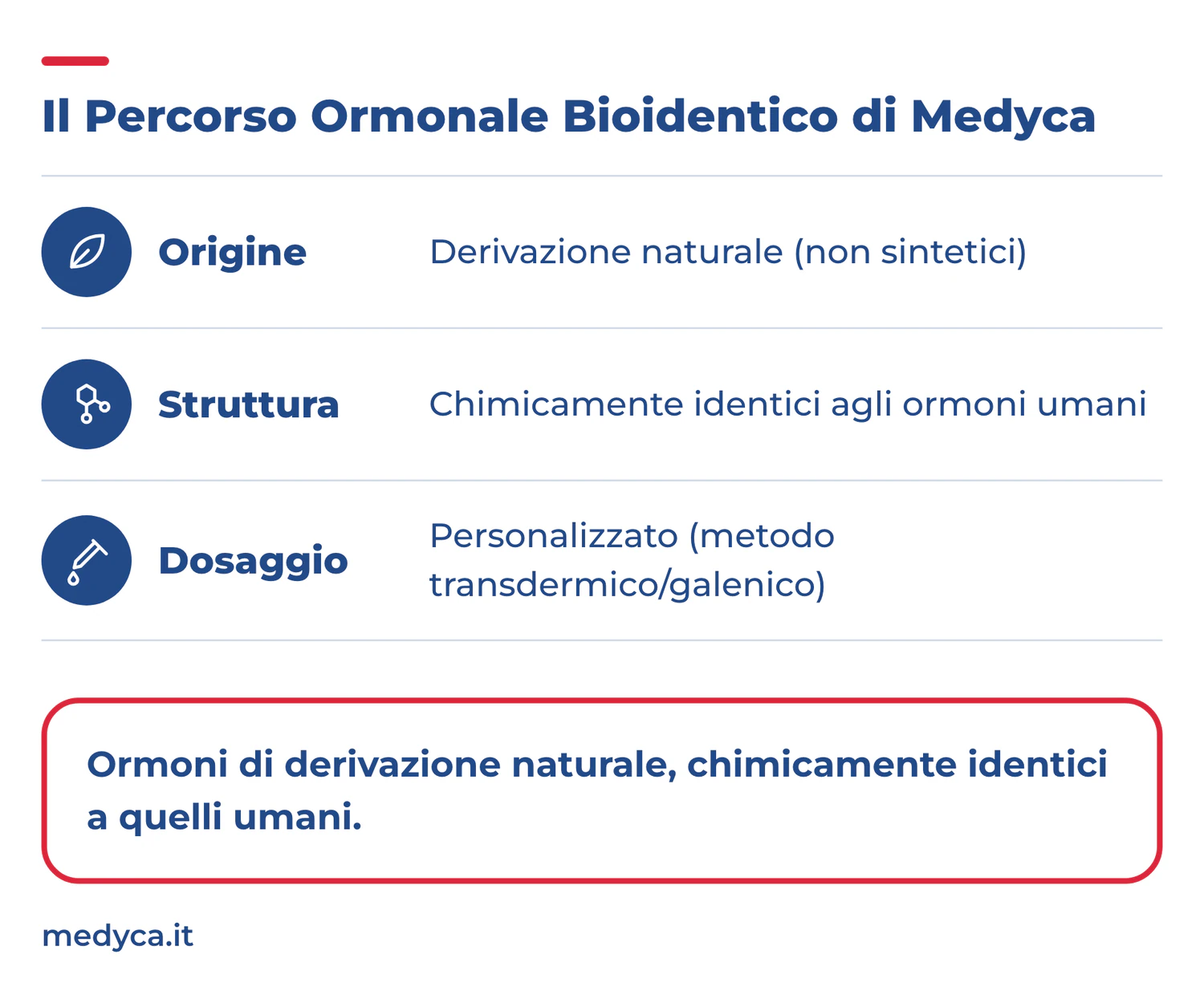
Molecular harmony is joined by maximum metabolic safety: by favouring the transdermal route (through the skin), the hormones enter the bloodstream directly, bypassing the liver entirely. By avoiding the liver overload typical of the old synthetic oral pills, the production of clotting factors is not altered, thus eliminating the increase in thrombotic and cardiovascular risk. Each pathway is also calibrated to the millimetre “like a made-to-measure suit” on the basis of each patient's real hormone profile, eliminating the limitations and adverse effects of the old standard industrial protocols.
By ensuring steady hormone levels, close to the body's physiology before menopause, bioidentical hormones offer extraordinary protection for heart health. It is precisely this exceptional cardiovascular and oncological safety that makes it possible to overcome the fear of the “expiry date” that has historically penalised conventional HRT. Because of the higher long-term risk profile, synthetic replacement therapy is in fact generally not recommended for use beyond 3-5 years. BHRT, by contrast, faithfully imitating human biology, has no rigid or arbitrary time limits: the therapy can be continued in complete safety for as long as you wish to maintain active protection of the heart, bones, brain and tissues, provided you have periodic monitoring tests and an annual medical review, so that the dose is constantly calibrated to the real needs of your body.
Would you like to talk it through with a doctor?
The first consultation is free, also by video call.
Book a free consultationHow long does bioidentical hormone replacement therapy take to work?
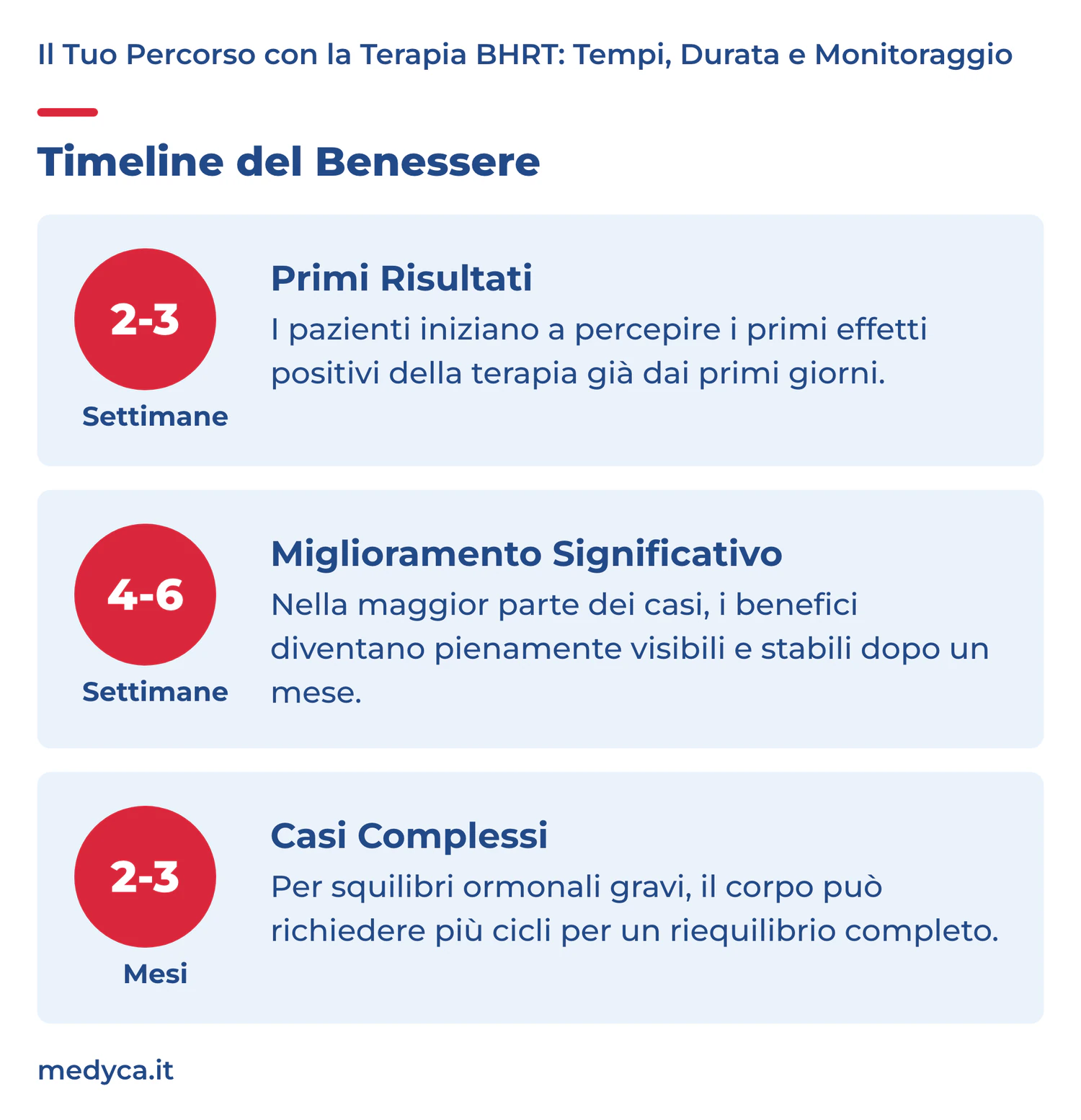
The BHRT pathway does not respond to instant dynamics, but follows the biological timescales of adaptation and regeneration of the body's tissues, resulting in a process of progressive biological attunement. Although for some women the initial response can be surprisingly fast, almost immediate, the first stable benefits generally begin to appear between 2 and 6 weeks after starting treatment.
This adaptation happens through well-defined physiological stages:
- From the first days to the first 2-3 weeks: The hormonal recharge begins at the level of the cell receptors. Many patients report an improvement in mood stability from the very first days, and partial relief from hot flushes and night sweats.
- Between 4 and 8 weeks: The benefits become clear and significant. There is a drastic reduction or complete disappearance of vasomotor symptoms, a profound improvement in sleep quality (which becomes deeper and more restorative), a recovery of mental energy and an improvement in skin elasticity.
- From 3 months onwards: Metabolic balance stabilises and the protection of the target organs (bones, heart, brain) is consolidated. Tissues that need deep cellular regeneration, such as the urogenital mucosa when countering severe vaginal dryness and pain during intercourse, show their greatest recovery.
What happens if the imbalance is more complex? Not all women start from the same level. If the initial hormone imbalance is particularly severe or if the woman is still in perimenopause (that is, she still has a menstrual cycle, albeit an irregular one), the natural hormone fluctuations may need more time and more cycles of therapy before the perfect balance is found. In these cases it is entirely normal for 3 to 4 months of treatment and medical monitoring to be needed in order to calibrate the doses “like a made-to-measure suit” and reach the wellbeing you want.
When is the right time to start hormone replacement therapy?

The ideal time to start treatment coincides with the appearance of the first changes in the menstrual cycle (perimenopause). The clinical aim is in fact to accompany the woman gently and proactively through this transition, preventing troublesome symptoms from appearing and ensuring, right from the start, strategic organ protection for the heart, bones and brain function.
If menopause has already occurred, preventing the chronic diseases linked to hormonal ageing depends closely on a fundamental scientific rule known as the “Window of Opportunity”. Large international clinical studies (KEEPS and ELITE) have amply demonstrated that starting BHRT within the first 10 years after the last period (and in any case before the age of 60) achieves the greatest preventive effectiveness. In this time frame, in fact, the walls of the blood vessels still retain their integrity and bioidentical oestrogens can work at their best to keep them elastic and healthy over time, slowing the progression of atherosclerosis.
Are there exceptions, or is it possible to start later? Absolutely. Menopause does not present in the same way in all women. Some women continue to maintain a small residual hormonal activity even after their periods have stopped, and so experience much milder or later symptoms than others. In these cases, therapy can still be considered, carefully assessing the appearance of signs linked to hormone deficiency, and in any case to ensure the protection of the vital organs. For this very reason, it is possible to start BHRT even later than the ideal 10-year window, provided you undergo a complete diagnostic screening and a careful, personalised medical assessment, case by case.
In the Bioidentical Hormone Pathway, this assessment is the first visit: the doctor reads your tests together with your symptoms and your medical history and assesses whether the therapy is right for you.
What are the side effects of BHRT?
When it comes to hormone replacement therapy (HRT), the fear of side effects and contraindications is often the main deterrent for many women. However, it is essential to understand that bioidentical hormones, having a chemical structure completely identical to that of the hormones our bodies produce naturally, are recognised and tolerated by the body in an extremely natural way, drastically reducing the problems typical of the old synthetic therapies, especially when given in appropriate, personalised doses.
That said, BHRT is an active medical therapy: if the doses are not perfectly calibrated to each patient's profile, some temporary signs can appear, easily resolved by adjusting the dose.
Temporary side effects: signs of the receptors adapting
In the first weeks of therapy, the cell receptors in your body, which have remained “silent” because of the drop in natural hormone production, start to receive nourishment again. This recharging process can cause minor, temporary symptoms, which should not alarm you but simply need to be monitored:
- Breast tenderness (mastalgia): This is a common adaptation symptom, which appears mostly in the first 4 weeks. Scientific evidence shows that, whereas with synthetic oral HRT breast tenderness affects about 18.2% of women, with transdermal estradiol this percentage falls significantly to 9.1%-11.3%. If it persists, it can easily be resolved by reducing the dose or changing the type of oestrogen.
- Tiredness or daytime sleepiness: This effect is closely linked to natural micronised progesterone. Because this molecule has a beneficial, calming and sleep-inducing effect on the nervous system (thanks to its interaction with the GABA receptors in the brain), it is advisable to take the therapy in the evening before going to bed, to improve the quality of your sleep.
- Water retention, abdominal bloating or headaches: These can occur if the oestrogen dose is temporarily too high or if the progesterone is not yet enough to balance it. At our centre, we resolve these discomforts by adjusting the dose, reducing the salt in your diet or switching to the transdermal route of choice.
- Minor skin blemishes (acne or oily skin): These can appear temporarily if the therapy includes androgens (such as female testosterone or DHEA) at doses not yet perfectly calibrated to your profile.
The side effects listed above are largely eliminated through personalisation of the therapy, which ensures a minimum effective dose perfectly in line with the needs of each woman, without any unwanted effects appearing.
Contraindications: when the therapy calls for careful assessment
As with any active medical therapy, there are some general contraindications (linked, for example, to specific liver, cardiovascular or active oncological conditions) that require careful clinical assessment. However, no woman is ruled out of BHRT a priori.
There are some clinical conditions that rule out the use of oestrogen by the systemic route: vaginal bleeding of unknown origin, active deep vein thrombosis or pulmonary embolism, severe acute liver disease, recent cardiovascular events (such as heart attack or stroke) or tumours in an active phase. However, thanks to precision medicine and BHRT, clinical situations are never black and white and deserve an individualised approach:
- Personal history of breast cancer: Although previous breast cancer is considered a contraindication to systemic hormone therapy, it is not an absolute a priori ban on every form of hormone treatment. The contraindication generally refers to tumours in an active phase, but where a tumour has been inactive for more than 12 months, personalised BHRT can be considered. To treat intimate symptoms alone (such as severe vaginal dryness and pain during intercourse), it is possible to use, in complete safety, very low-dose local oestrogens (such as vaginal estriol), which act only locally without affecting overall hormone levels.
- Genetic predisposition (BRCA1 and BRCA2): Women who carry these genetic mutations and have had their ovaries removed as a preventive measure can take BHRT. Large clinical studies and meta-analyses have confirmed that the use of replacement therapy in these patients does not increase the risk of developing breast cancer in any way.
The decision to start treatment is always an individual one and must be guided by a doctor with expertise in BHRT. Through a careful preliminary consultation and the assessment of in-depth blood tests, the doctor is able to study each patient's medical history and calibrate the therapy “like a made-to-measure suit”. To prevent any side effects, you must always start with the lowest possible doses in order to maximise the benefits and the protection of the vital organs, in a completely personalised way for each specific patient. This personalised approach, based on the principle of the minimum effective dose and on periodic monitoring, makes it possible to prevent and resolve any imbalance at the outset, ensuring an extremely safe, serene and effective therapeutic pathway.
How is BHRT monitored over time?
BHRT requires regular, ongoing monitoring to ensure that the hormone dose remains appropriate to the needs of each woman. It is essential to keep your doctor or gynaecologist up to date on your BHRT pathway, so that the therapy can be placed within an overall view of your personal medical history.
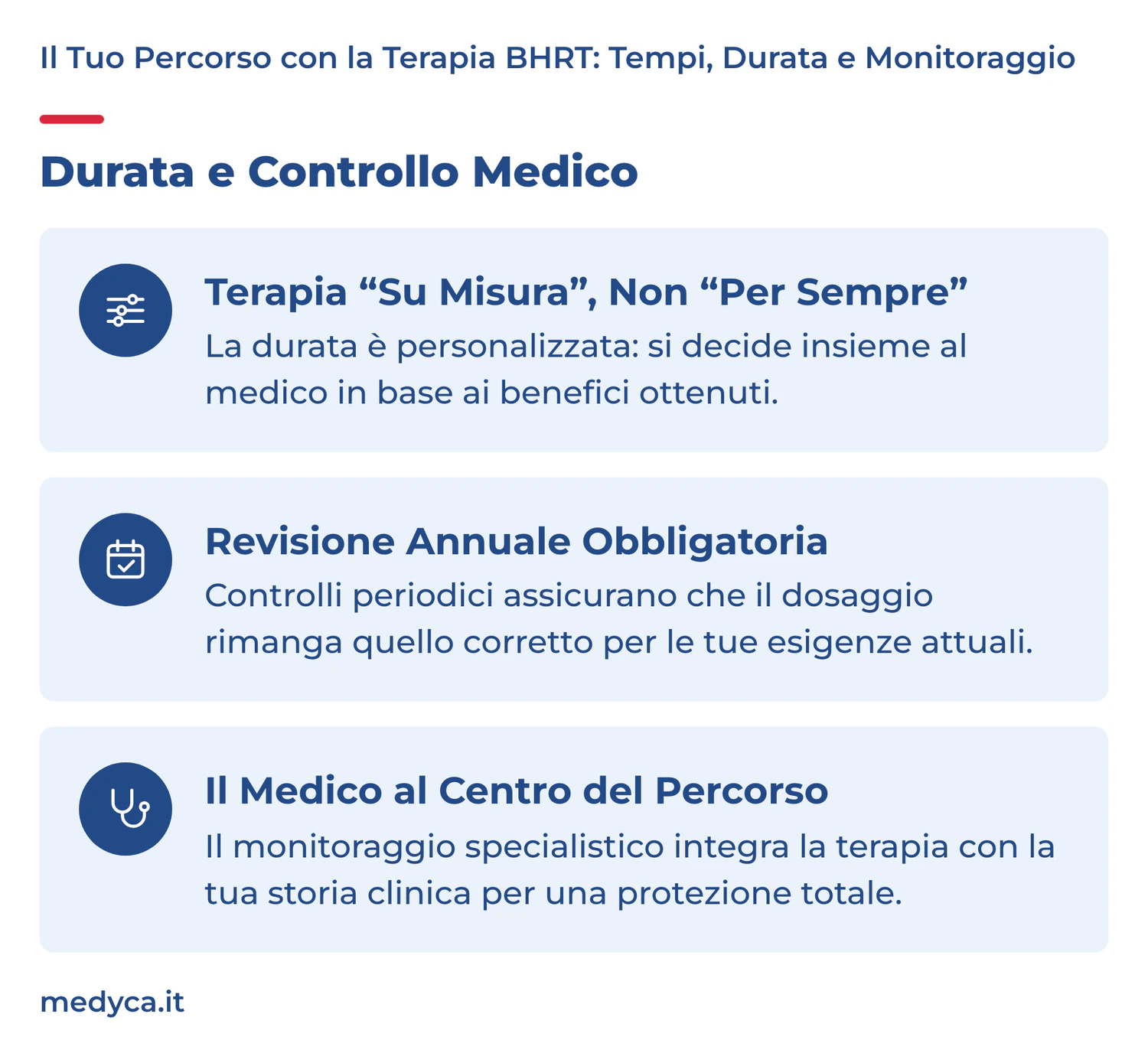
After the first follow-up at 3 months and, usually, a second one in the first year to arrive at the right dose, BHRT involves an annual follow-up, with the blood tests repeated, to make sure the hormone dose is always the most suitable for your hormone profile.
This personalised approach makes it possible to adapt the therapy to the changes in your body over time, maintaining the effectiveness of the treatment and the quality of life you have achieved.
During these reviews, you will be able to discuss with your doctor:
- How effective BHRT is for your specific symptoms
- Any changes in your general health or any further symptoms
- Whether the dose needs adjusting
- The decision to continue or to complete the treatment
- The possibility of starting further complementary treatments to restore your health on a 360-degree basis, involving other medical specialists in your pathway
The decision to continue or stop the therapy will always be made together with your doctor, based on the benefits you are getting and on your individual needs and preferences.
Do I have to stay on this therapy for life?
No. BHRT is personalised to the individual. The decision to continue the treatment or to complete it will be made between the patient and the doctor. There are no fixed rules. However, if you are reaping the benefits and your quality of life has improved considerably, there is no reason why you should stop the treatment, which is subject to an annual review to check that the hormone dose is the right one for you.
Is it possible to switch from synthetic HRT to bioidentical hormone therapy?
Yes. There are many reasons why patients might want to switch from hormone replacement therapy (HRT) to BHRT, that is, bioidentical hormone therapy.
Patients can switch immediately, which reduces the risk of symptoms coming back because hormone intake is never interrupted. Our body does not notice the change from synthetic to bioidentical hormones, and so menopause symptoms do not return.
Alternatively, patients receiving a treatment without oestrogen can stop their current treatment for 6 weeks before being reassessed and starting a new treatment regimen.
Why didn't my doctor tell me about this treatment before?
It is a question we hear almost every day. The reality is that, although science is making great strides, day-to-day clinical practice takes time to catch up. Most doctors are not familiar with BHRT.
Menopause is still seen as a phase of life to be accepted
First of all, an old medical culture still persists that tends to “normalise” the symptoms of menopause. Many doctors do not recognise the lack of oestrogen and progesterone as an imbalance to be tackled promptly, but as an “inevitable toll” that every woman must simply accept with resignation. Other doctors with a more up-to-date outlook, on the other hand, see menopause as a phase of life that deserves support and protection, not endurance.
Doctors usually learn about BHRT from their patients. It is important to create demand for such an effective treatment and to encourage your doctor to find out more about how you have benefited from BHRT. During the therapy, it will be important to keep your doctor up to date on your BHRT pathway, placing it within an overall view of your personal medical history.
Pharmaceutical reps have little interest in spreading the word about bioidentical hormones
Second, medical education is often influenced by the big pharmaceutical companies. Most doctors do not have time to keep training independently once they have finished their studies, so they rely on pharmaceutical reps to stay up to date on new products and therapies. This runs up against a technical and economic limit, however: bioidentical hormones are molecules identical to those produced by the human body and, for this reason, are hard to patent as industrial “discoveries”. This means that pharmaceutical companies have little interest in investing to spread therapies that cannot be standardised and “mass-produced” for sale to millions of people.
For this reason, what you hear about most today is rBHRT (regulated industrial bioidentical hormones): “ready-to-use” products which, although valid, offer fixed doses set for an “average patient”. One of these is Bijuva, currently the only approved combined industrial medicine that brings together both estradiol and natural micronised progesterone in the same oral preparation.
But no woman is “average”: each has her own needs, her own symptoms, and a personal and family medical history that sets her apart from anyone else. This is why many women prefer cBHRT (magistral compounded bioidentical hormones), which allows absolute personalisation of the therapy for each patient. Thanks to the “ad personam” medical prescription, the compounding pharmacist prepares for you the exact dose that your body needs, based on your unique hormone profile and the severity of your symptoms.
Personalised compounded preparations: setting the record straight on safety and checks
It is important to stress that “personalised” does not mean less safe. Specialist compounding pharmacies in Italy work in state-of-the-art laboratories, following rigorous standards of purity, precision and sterility that are in no way inferior to the industrial processes of pharmaceutical companies. Every compounded preparation is the result of tailor-made precision designed to eliminate the side effects linked to excessive or insufficient doses.
One of the objections you most often come across on the web concerns the supposed “lack of standardisation” of personalised compounded preparations (cBHRT). Some sceptics, often linked to the promotion of ready-to-use industrial products alone (rBHRT), try to insinuate doubt that therapies prepared to measure in a pharmacy are not equally safe or verified. The scientific and regulatory reality in Italy, however, tells a very different story.
In Italy, the legislation governing compounding laboratories is among the strictest in Europe. The pharmacies we work with prepare compounded bioidentical hormones in accordance with the Good Preparation Standards of the Official Pharmacopoeia: every step, from the certified raw materials to shipping, is subject to strict, traceable checks. Every compounded preparation is a “tailor-made” therapy that is made up individually for you, weighed and checked by the pharmacist on the basis of your doctor's prescription.
Trying to demonise magistral compounding means ignoring the value of a medical tradition going back over a thousand years that today draws on extremely high technological standards.
This misleading narrative often serves to protect the commercial interests of those who make mass-produced industrial drugs: made-to-measure therapies, not being patentable as standard molecules, do not generate mass profits. Compounded preparation, however, is often the best way to personalise the therapy 100%: every woman is different, and most women benefit more from a made-to-measure therapy than from a standard therapy that is the same for everyone.
Menopause is an important physiological transition, but it should not be lived as a renunciation of your vitality, your health or your intimate identity. Personalised bioidentical hormone therapy (BHRT) is today the safest and most effective scientific tool for proactively protecting the heart, bones and brain function.
Do you want to find out whether the therapy is right for you?

Dr Cristina Lenzi
Dr Cristina Lenzi is an internal medicine physician and the Medical Director of Medyca, where she looks after women's health in perimenopause and menopause with bioidentical hormone therapy.

Medyca is a medical service founded by Dr Cristina Lenzi, one of the few doctors in Italy specialising in bioidentical hormone therapy. A specialist in Internal Medicine, cum laude, from the Università di Siena, she holds a PhD in osteometabolic diseases and Level I and Level II Master's degrees in bioidentical hormones from the Marion Gluck Clinic in London.
The first introductory consultation is free and without obligation: it is the way to find out more and understand whether the pathway is right for you. We look after patients from anywhere in Italy by video call, and in person at our practice in Siena.
Find out more: