Treating menopause with personalised, transdermal bioidentical hormone therapy: the Marion Gluck method
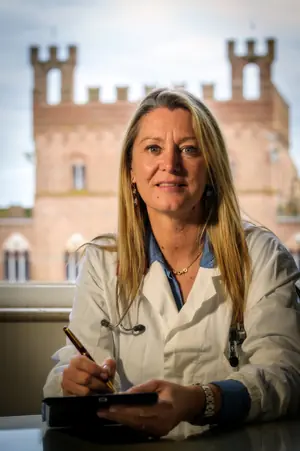
Written by Dr Cristina Lenzi
Who discovered bioidentical hormones?
The history of bioidentical hormones goes back to 1942, when the scientist Russell Marker (at the University of Pennsylvania), who devoted his life to the study of hormones, managed for the first time to synthesise natural progesterone from plant-derived precursors extracted from a special Mexican plant, Dioscorea villosa (wild yam).
This low-cost progesterone eventually became the preferred precursor in the industrial preparation of the anti-inflammatory drug cortisone. Dr Marker founded the first pharmaceutical company to work actively on bioidentical hormones and contraception.
This historic scientific discovery then paved the way for the industrial production and compounding of modern bioidentical hormones, showing that, although it starts from a botanical base, the process requires biochemical precision and advanced laboratory standards in order to be effective and safe in the human body.
Would you like to talk it through with a doctor?
The first consultation is free, also by video call.
Book a free consultationBioidentical hormones have been used by women in menopause all over the world for more than 20 years
Until 20 years ago all doctors recommended synthetic hormone replacement therapy (HRT) to all women entering menopause. Then there was a sharp reversal after a large American study showed that the progesterone used in synthetic preparations (to be exact, medroxyprogesterone acetate) could increase the risk of breast carcinoma, in other words breast cancer.
From that moment doctors simply stopped prescribing any HRT, and women went into menopause with no explanation and no support for the whole series of symptoms that would change their lives forever.
Later studies in the following years then provided further proof that the increases in risks and side effects were mainly associated with taking synthetic hormones, thereby clearing bioidentical hormones and opening the door to a new spread of this therapy, which can really help to restore the wellbeing and protection of women in menopause.
- 2002: A study by the WHI (Women's Health Initiative) involved more than 16,000 American women and showed a raised risk of breast cancer for women taking synthetic oestrogen and progesterone (that is, not bioidentical).
- 2012: The WHI re-evaluated the earlier study and showed that the side effects were due to the use of synthetic progesterone, not oestrogen.
- 2022: A recent study that reconfirms synthetic progesterone as solely responsible for the increase in breast cancers.
Since then, the use of synthetic hormone therapy has collapsed, while bioidentical hormone therapy (BHRT) continues to grow because it shows no side effects.
Nowadays, the scientific community all over the world is almost unanimous in stating that all women in menopause should protect their bodies by taking hormone therapy after the menopause.
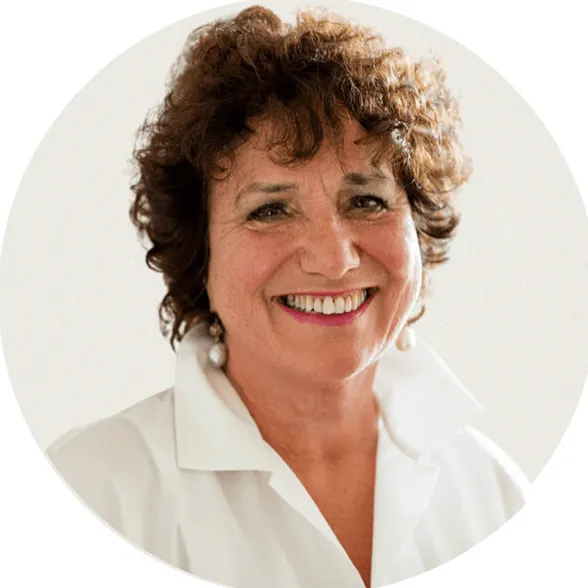
Mother of bioidentical hormone therapy for the treatment of menopause
Who is Dr Marion Gluck? The mother of bioidentical hormone therapy (BHRT)
In the 1970s numerous research projects and scientific studies began to speak of the risks associated with taking chemical progesterone and pharmaceutically synthesised oestrogen.
In 1980 the British Medical Journal recommended taking bioidentical progesterone for women who had experienced side effects with chemically synthesised progesterone.
Dr Marion Gluck was among the pioneers in the use of bioidentical hormones for the treatment of menopause, and opened her clinic in London in the 1980s. For very many years the Marion Gluck Clinic in London has been treating women in menopause, following a method that sets it apart:
- Bioidentical hormones, to avoid the risks and side effects of synthetic hormones, and without having to make women stop the therapy after a few years of use
- Compounded preparations, which unlike industrial products allow 100% personalisation to the profile of each patient. Each woman thus receives exactly the dose she needs, without having to settle for the first dose available in mass-produced medicines.
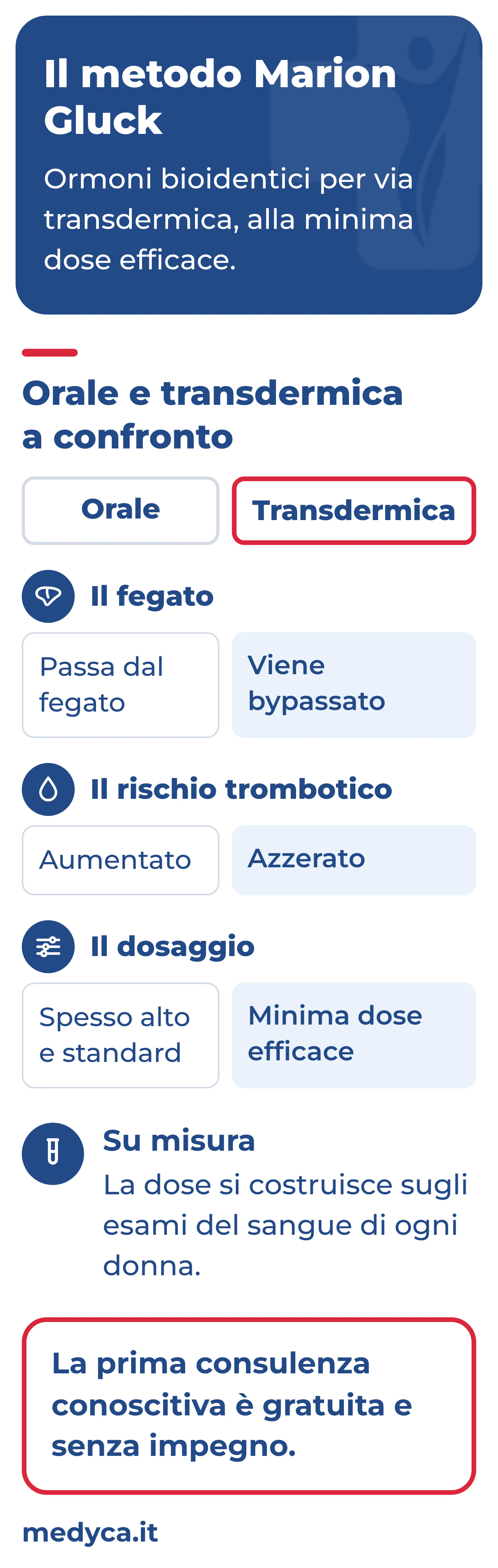
- Transdermal administration, which unlike oral administration removes the active role of the liver, thereby eliminating the thrombotic risk
In the Bioidentical Hormone Pathway the route, the molecules and the dose are chosen by the doctor after the hormone tests and the first visit, based on each woman's profile.
Why do some doctors prescribe tablets and others creams?
There are 2 methods for setting up bioidentical hormone therapy (BHRT):
- The American method converts the doses of classic synthetic hormone replacement therapy (HRT) into tablets or capsules to be taken orally. Such doses are often too high for most patients, causing severe, even serious, side effects, and they later have to be reduced and personalised.
- The English method of Marion Gluck involves transdermal administration (that is, through the skin), unless there are rare contraindications to it. Doses start straight away from a careful analysis of each patient's blood tests, and the aim is to ensure good hormonal balance, starting from small doses and gradually increasing.
The aim of the Marion Gluck method is to administer the smallest amount of medicine sufficient to guarantee treatment of the symptoms and active protection of the organs. This type of dosing is called the “lowest effective dose”, that is, the smallest amount of therapy needed to maximise the benefits while avoiding the risks.
The role of the liver and the benefits of transdermal administration
HRT on the American model involves taking the hormones by mouth, with consequent gastric absorption and arrival at the liver. The liver has to produce special accompanying proteins in order to absorb these synthetic sex hormones, because they are similar but not identical to those the body produced before the menopause.
To produce these accompanying proteins for the sex hormones, the liver increases the production of all its proteins. Most of the liver's proteins are clotting factors, whose production significantly raises the thrombotic risk in those women who take synthetic hormones.
Bioidentical hormone therapy (BHRT) does not increase the liver's workload because bioidentical hormones are recognised as exactly the same as those the body produced until the menopause, and which it continues to produce, albeit in much lower quantities. The liver is therefore not activated to produce accompanying proteins, thus leaving the thrombotic risk unchanged.
Bioidentical hormones in menopause protect the vital organs and reduce risks
With the onset of menopause, the drastic drop in oestrogen deprives the female body of a fundamental protective shield, accelerating the ageing of three vital systems:
- Bones: The drop in oestrogen profoundly alters calcium metabolism and speeds up the loss of bone mineral density, exposing women to a high risk of osteoporosis and fragility fractures.
- Heart: As the vasodilating and cholesterol-regulating action of oestrogen is lost, menopause becomes an independent cardiovascular risk factor, raising the risk of atherosclerosis, hypertension, heart attack and stroke.
- Brain: Hormone depletion directly affects key neurotransmitters such as serotonin, dopamine and GABA, causing both mood disturbances (irritability, anxiety, insomnia) and a decline in short-term memory and concentration.

Why don't we hear about bioidentical hormone therapy?
Doctors no longer have time to study, and the scientific updates needed to keep up with new developments in medicine are in practice delivered mainly by pharmaceutical company representatives.
By law, it is not possible to patent something that exists in nature. Being exactly the same as those produced by our body, bioidentical hormones cannot be patented in most of their forms.
This means that no pharmaceutical company has the exclusive right to produce bioidentical hormones. The result is that most of the pharmaceutical industry, the main tool for spreading scientific updates in the medical community, has no interest in promoting a therapy with drugs that it cannot produce and market.
Against this background, one of the most common criticisms levelled at cBHRT (personalised compounded therapy) concerns the alleged “lack of standardisation” of the laboratories. Some detractors, often driven by a commercial interest in promoting only fixed-dose industrial products, try to insinuate that preparations made up in the pharmacy are not as safe or as closely controlled. The clinical and regulatory reality in Italy categorically refutes these claims. Pharmacies specialising in magistral preparations operate under the strict control of the Ministry of Health and rigorously follow the Norme di Buona Preparazione (NBP) laid down by the Farmacopea Ufficiale. Every single step (from the sourcing of very pure plant-derived raw materials with a certificate of analysis, to processing with analytical balances accurate to the thousandth, through to storage and dispatch) is subject to strict safety and traceability protocols.
Moreover, there is a fundamental misunderstanding about the concept of quality control: while the pharmaceutical industry produces millions of identical batches, testing only a statistical sample of them, the compounded preparation is a “tailor-made” therapy. It is made up, weighed and checked individually by the compounding pharmacist for each patient, on the basis of an individual medical prescription. Demonising this sector means ignoring extremely high technological standards and obstructing women's right to access a personalised, safe and tolerable dose, impossible to replicate with mass-produced industrial medicines.
For the reasons listed above, bioidentical hormone therapy (BHRT) remains the preserve of a few doctors who have the motivation, the passion and the interest to train and to raise awareness about a therapy that can revolutionise the wellbeing and protection of women in menopause.
To date, bioidentical hormone therapy is the only solution for women's wellbeing and long-term protection of bones, skin, the cardiovascular system and the nervous system.
It is not a choice: it is a duty for all women.
My name is Cristina Lenzi. I am a specialist in internal medicine and I earned a Level 1 and a Level 2 Master's at the Marion Gluck Clinic in London.
I look forward to seeing you, so that we can start the bioidentical hormone pathway for menopause right away!
Do you want to find out whether the therapy is right for you?
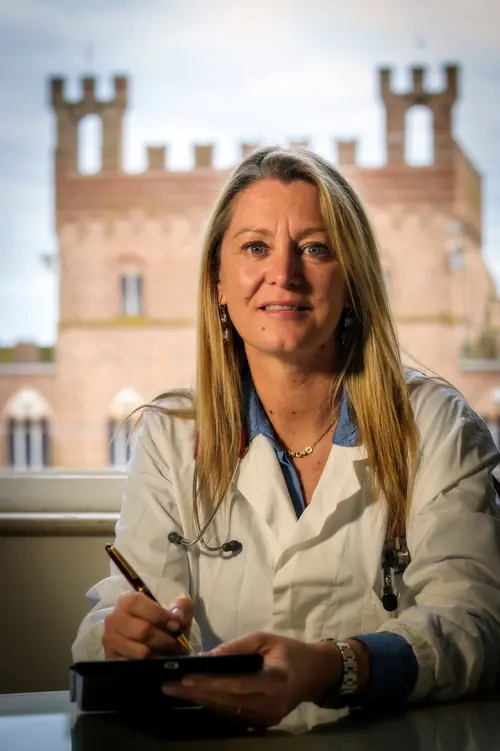
Dr Cristina Lenzi
Dr Cristina Lenzi is an internal medicine physician and the Medical Director of Medyca, where she looks after women's health in perimenopause and menopause with bioidentical hormone therapy.

Medyca is a medical service founded by Dr Cristina Lenzi, one of the few doctors in Italy specialising in bioidentical hormone therapy. A specialist in Internal Medicine, cum laude, from the Università di Siena, she holds a PhD in osteometabolic diseases and Level I and Level II Master's degrees in bioidentical hormones from the Marion Gluck Clinic in London.
The first introductory consultation is free and without obligation: it is the way to find out more and understand whether the pathway is right for you. We look after patients from anywhere in Italy by video call, and in person at our practice in Siena.
Find out more: