Do all men go through andropause? Let's look at age, symptoms, diagnosis and solutions.
Written by Dr Cristina Lenzi
Men go through menopause too: let's find out what andropause (male menopause) is
At what age does the process of andropause begin?
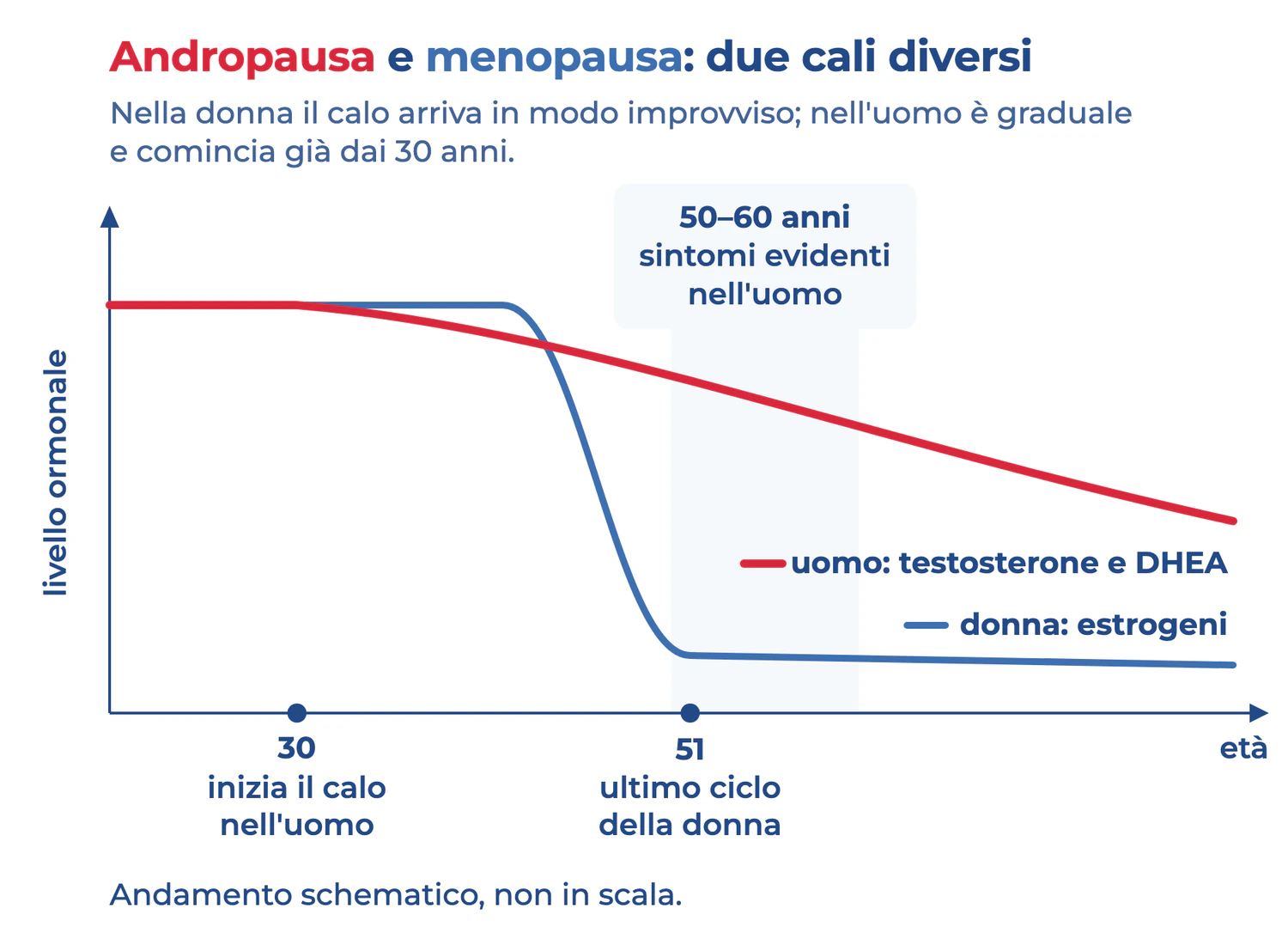
Many people don't know it, but men also go through a stage similar to menopause: it is called andropause, or male menopause. Unlike the female one, however, it does not happen suddenly but appears gradually, often without the partner realising. Levels of testosterone and DHEA, hormones that are essential for male vitality, start to fall as early as 30 and the process becomes more evident after 50.
Would you like to talk it through with a doctor?
The first consultation is free, also by video call.
Book a free consultationDo all men go through andropause?
Not all men go through andropause at the same time. What is certain is that from the age of 30 testosterone falls progressively in men's blood. Physical activity, exercise and a healthy lifestyle help to keep levels adequate, but sooner or later they fall, as happens to women in menopause.
And it is not only a matter of sexual performance: as hormones decline, their protection of the heart, bones and brain is lost too.
What are the symptoms of andropause?
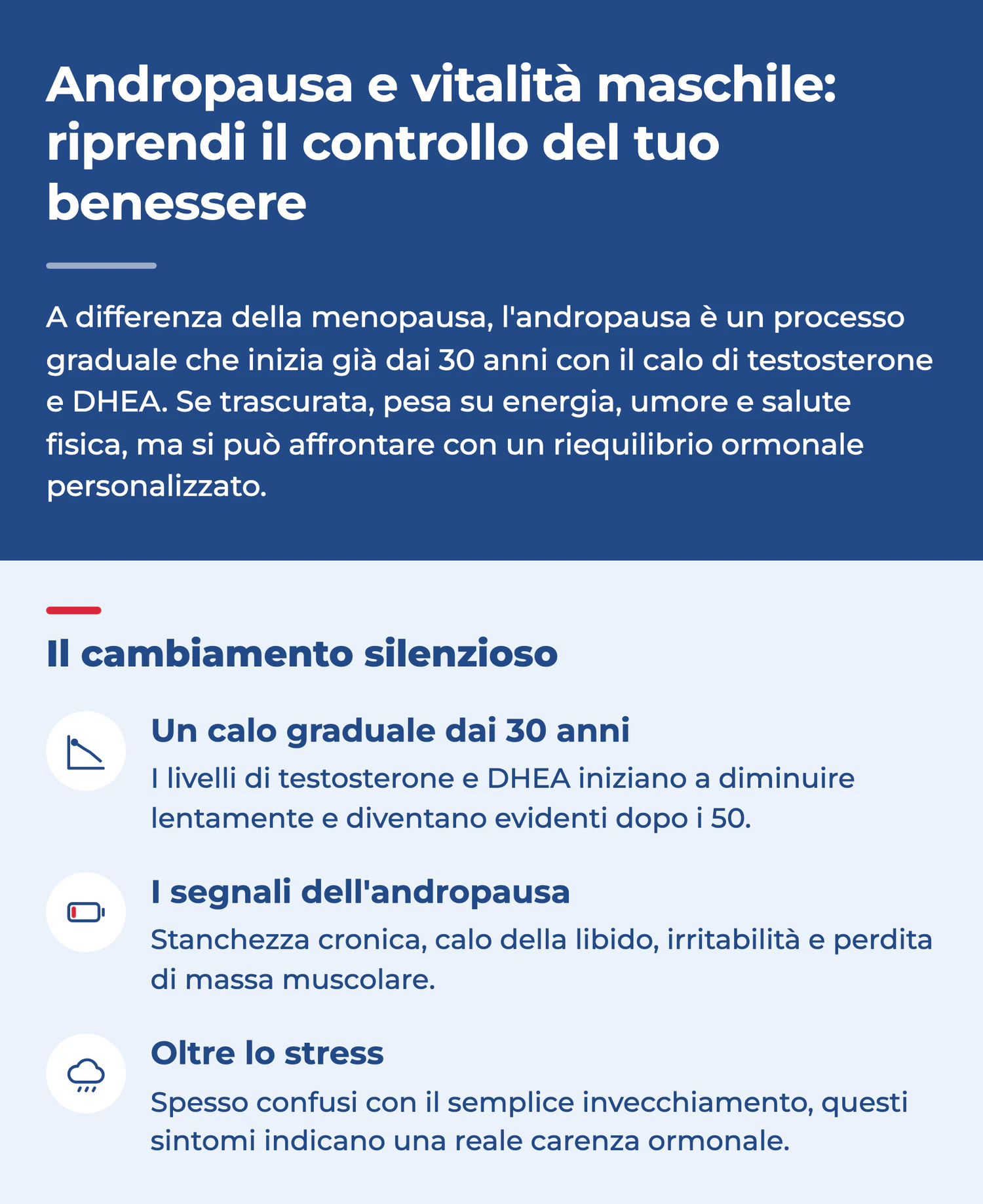
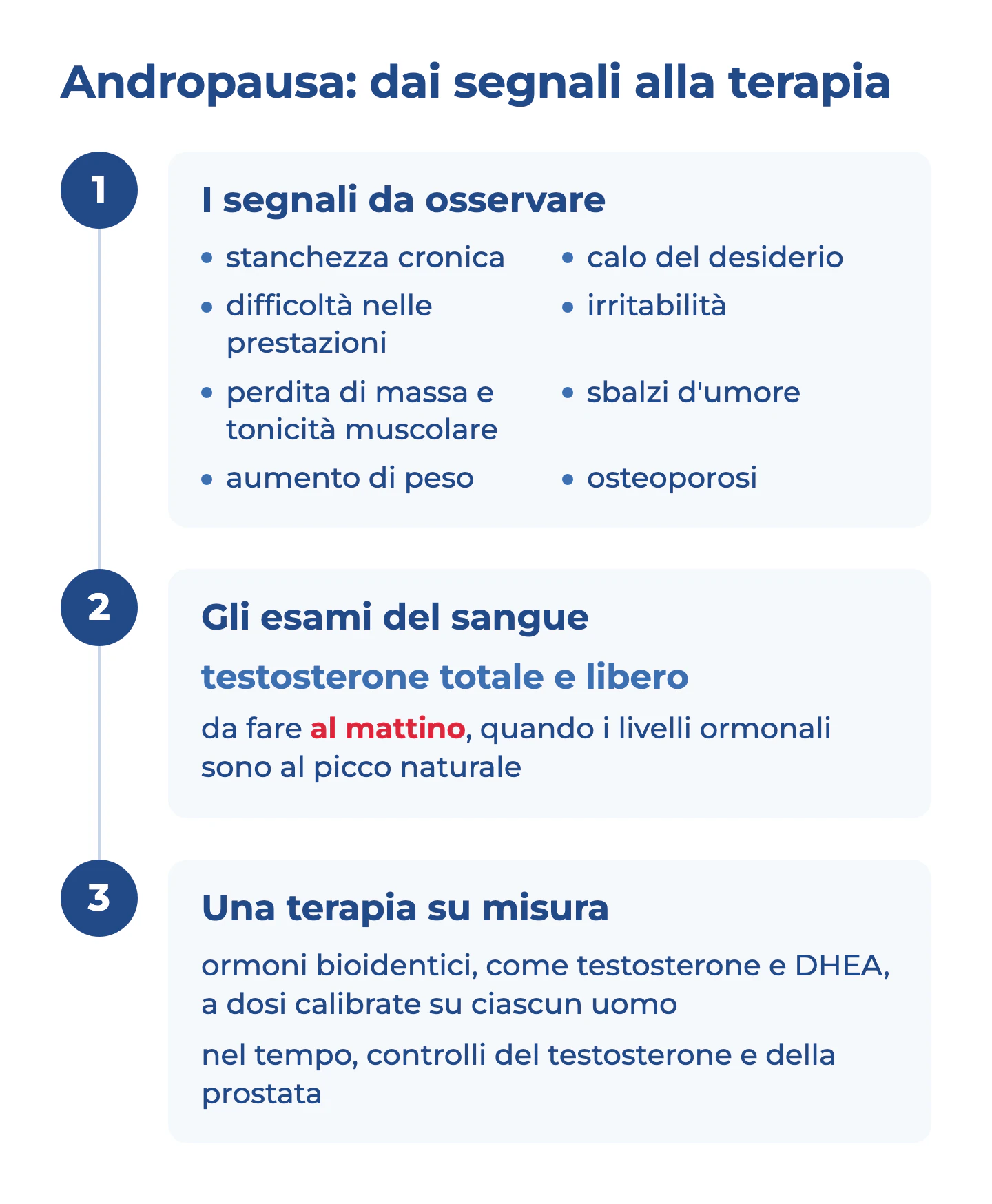
The symptoms of andropause can be:
- chronic tiredness;
- reduced sexual desire;
- irritability;
- difficulty with sexual performance;
- loss of muscle mass;
- reduced muscle tone;
- weight gain;
- osteoporosis;
- mood swings;
If it's your partner: how to help a man going through andropause
That is why you may have noticed that your partner has changed, feels less energetic or is withdrawing into himself. It is not just stress or age: it could well be andropause.
Knowing about this is important for men and women alike, because it is often women who push their partners to look after themselves. Talking openly about this change and the solutions that exist can strengthen the relationship, improve intimacy and bring quality back to everyday life.
That is often exactly how it happens with us: most of the men we treat with bioidentical hormone therapy come on the advice of their wives, who are already our patients. Talking to us, many women discover that the therapy they are following can bring benefits to men too, and when they recognise the same gradual changes in their partner, they help him find a solution to feel better.
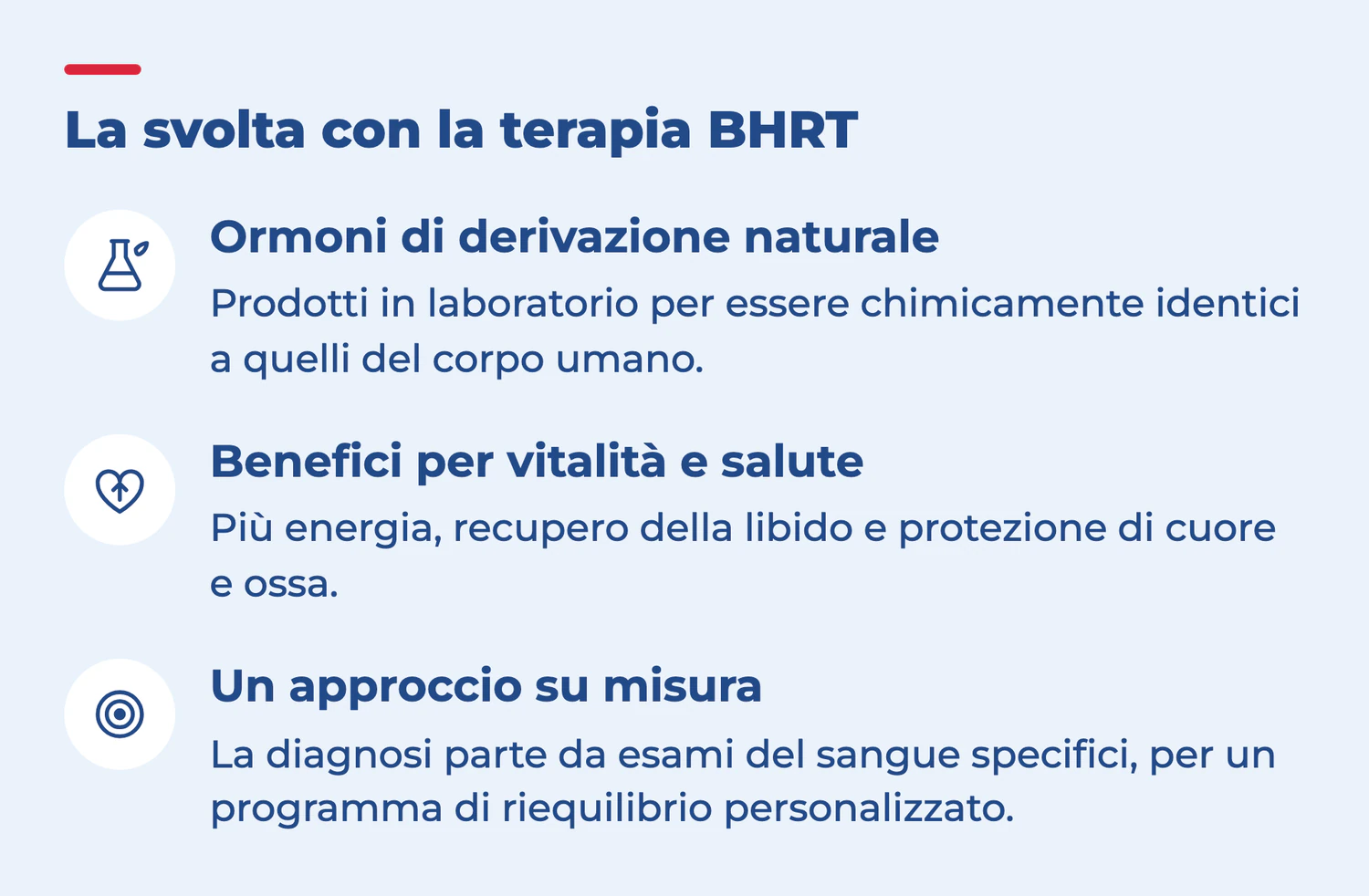
There is a solution: bioidentical hormones to treat andropause in men
Many men, instead of tackling the causes at the root, turn to drugs that stimulate erection (such as Viagra). The problem? These products can have significant side effects, especially on the heart and circulation, increasing the risk of heart attacks and ischaemia — particularly in men who already have high blood pressure, high cholesterol or are overweight.
The good news is that there is now a safe, effective and natural solution for dealing with andropause: bioidentical hormone therapy, such as testosterone and DHEA. Unlike over-the-counter drugs for sexual performance, bioidentical hormones are chemically identical to those naturally produced by the human body, and work in harmony with the body without side effects.
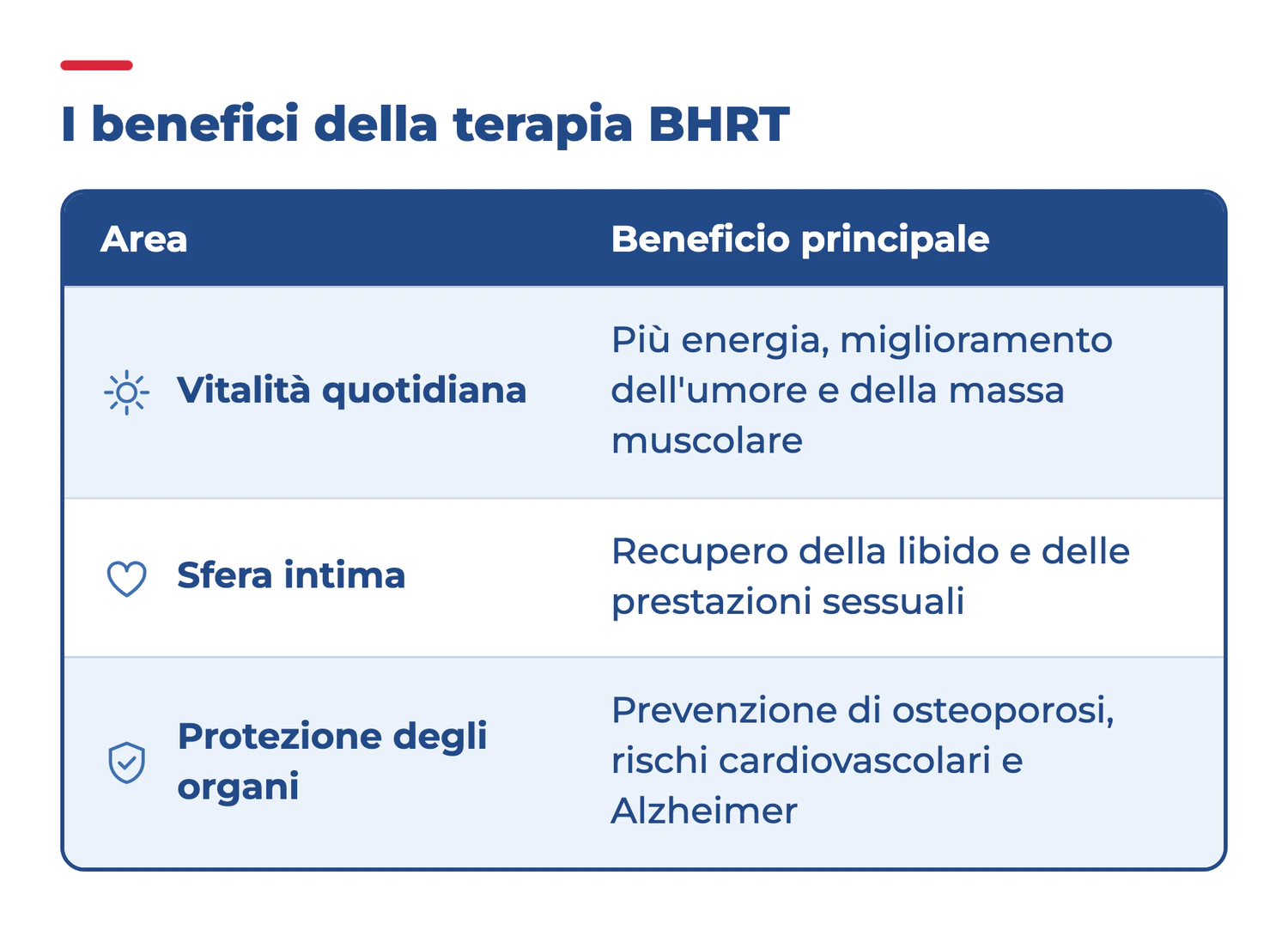
The benefits? Many, and often immediate:
- Improved energy and mood
- Recovery of libido and sexual performance
- Reduction in visceral fat
- Cardiovascular protection
- Prevention of osteoporosis and of neurodegenerative diseases such as Alzheimer's
No less important: bioidentical hormone therapy can also have a profound impact on life as a couple, improving communication, intimacy and the quality of everyday life.
How is andropause diagnosed, and what does treatment involve?
To diagnose andropause, an assessment of symptoms is combined with specific blood tests, in particular measurement of total and free testosterone (the active form of the hormone). The tests are done in the morning, when hormone levels are at their natural peak.
Once the deficiency is confirmed, it is possible to start a personalised hormone rebalancing programme, with doses calibrated to individual needs. This approach avoids side effects, guaranteeing an immediate improvement in general wellbeing and in men's health, in the long term too.
If you recognise these signs, in yourself or in someone close to you, the first step is to talk to a doctor who is an expert in hormones. The first consultation with Dr Lenzi is free and with no obligation, even by video call.
Book a free consultationLifestyle and bioidentical hormones: a winning combination
Hormone therapy is more effective when accompanied by a healthy lifestyle. Here are some good habits that can amplify the benefits:
- Regular physical activity, especially aerobic and resistance exercise, which stimulates the body's own production of testosterone.
- A balanced diet, rich in lean protein, vegetables and good fats and low in refined sugars.
- Good-quality sleep, at least 7-8 hours a night, essential for hormone production.
- Stress management, with relaxation techniques such as yoga, deep breathing or meditation.

Here too, the role of the woman at his side is fundamental: supporting and accompanying him on this pathway can really make a difference.
Understanding andropause to look ahead with greater awareness
Andropause is a delicate stage, but a manageable one. Understanding what happens in the male body during this transformation helps to make better sense of certain behaviours and difficulties, and can open the way to a more empathetic dialogue within a couple's life.
Restoring hormonal balance with naturally derived, personalised approaches can be an important ally for men's wellbeing, improving health, energy and the quality of everyday life. Finding out more and observing carefully are already the first, fundamental steps towards looking after this new stage of life together.
Frequently asked questions about andropause
How can you tell if a man is going through andropause?
From the symptoms, first of all: tiredness, reduced desire, difficulty with sexual performance, loss of muscle mass, mood swings. Confirmation comes from blood tests, in particular total and free testosterone, to be done in the morning, when hormone levels are at their natural peak.
Andropause and menopause: what is the difference?
In men the fall in hormones, above all testosterone and DHEA, does not arrive suddenly as it does in women: it is gradual, begins as early as 30 and becomes evident around 50, 55, even 60, a little later than in women. That is why it often goes unnoticed, even by the partner.
How long does andropause last?
It is not a stage that ends: testosterone starts to fall at around 30 and keeps falling slowly with the years. The decline is gradual, and that is why many men notice it late; symptoms generally become evident between 50 and 60.
Can you have sex during andropause?
Yes. Andropause reduces desire and makes sexual performance more difficult, but it does not take away a man's sex life, and a man remains fertile even at an advanced age, although his capacity declines with the years. When the drop in desire depends on hormones, rebalancing them helps to recover it.
How can you help a man going through andropause?
Talk about it openly, without putting everything down to stress or age, and encourage him to look after himself: it is often women who push their partners to do so. Supporting him and accompanying him on the hormone pathway, as well as in his everyday habits, can really make a difference.
How is andropause treated?
With bioidentical hormone therapy, such as testosterone and DHEA, at doses calibrated to each man's needs after the tests. Testosterone is applied to the skin, as a cream or gel; over time the testosterone tests are repeated and the prostate is checked periodically. The therapy is more effective when accompanied by regular physical activity, a balanced diet, good-quality sleep and stress management.
Do you want to find out whether the therapy is right for you?
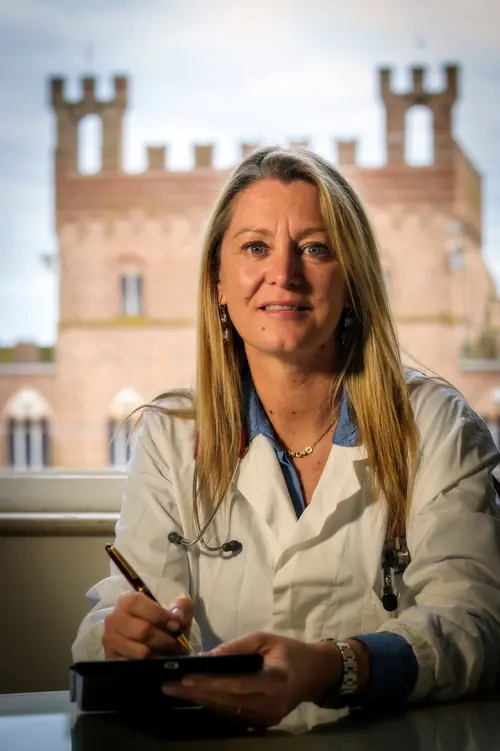
Dr Cristina Lenzi
Dr Cristina Lenzi is an internal medicine physician and the Medical Director of Medyca, where she looks after women's health in perimenopause and menopause with bioidentical hormone therapy.

Medyca is a service founded by Dr Cristina Lenzi, one of the few doctors in Italy specialising in bioidentical hormone therapy, and also looks after men going through andropause.
The first introductory consultation is free and without obligation: it is the way to find out more and understand whether the pathway is right for you. We look after patients from anywhere in Italy by video call and in person at our practice in Siena.
If you are reading this for your partner, it is a first step you can suggest to him.
Find out more: