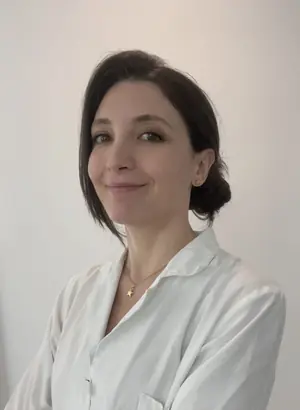
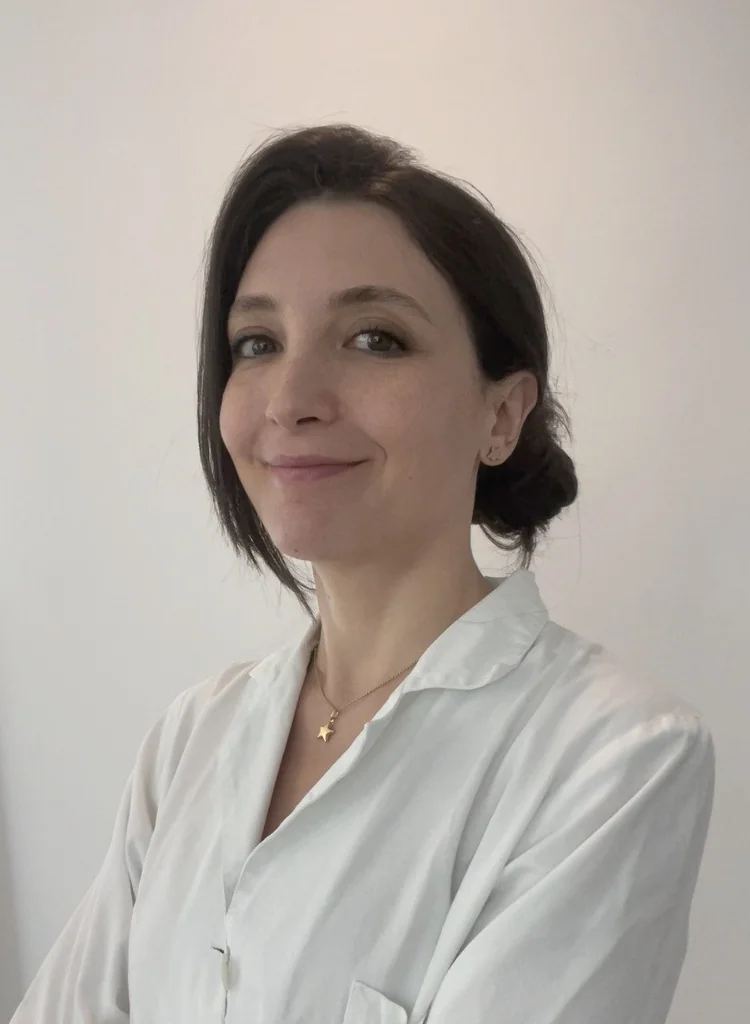
 Dr Lucia Stella carries out the visits and looks after you over time, in coordination with Dr Lenzi. She is a medical doctor, a specialist in Nutrition Science and a research fellow at the Clinica Medica e Geriatrica of the IRCCS INRCA in Ancona, where she is affiliated with the Ambulatorio di Medicina Cardiometabolica del Sovrappeso (cardiometabolic medicine clinic for overweight) and takes part in international clinical studies on obesity. She sits on the executive board of the Marche section of the Società Italiana dell'Obesità.
Weight management and cardiometabolic health in menopause
A medical assessment built with Prof. Riccardo Sarzani and carried out by Dr Lucia Stella, within the Bioidentical Hormone Pathway, coordinated with Dr Cristina Lenzi.
Visits by video call from anywhere in Italy.
In menopause, weight is not the only thing that changes
A waistline that widens while the scales hardly move.
Swollen ankles in the evening. Blood pressure that, at a check-up, comes out higher than it has ever been. Cholesterol that, for the first time, goes outside the normal range, even though you eat as you always have.
These are things that many women describe during the transition, and they are often seen one at a time: a problem with your figure, a passing nuisance, a test to repeat. Looked at together, they tell a different story.
The menopausal transition is also a cardiometabolic transition: the body changes where it accumulates fat, muscle mass decreases, the fats in the blood change, and so does the way the body handles sugar.
This is why Medyca, together with Prof. Riccardo Sarzani and Dr Lucia Stella, has built a medical assessment focused on the metabolic and cardiovascular profile, within the Bioidentical Hormone Pathway that you are already following.
Why it happens
Fat accumulates in different places. With the drop in oestrogen, fat mass can increase, especially visceral fat, around the abdominal organs, while muscle mass decreases. At the root of every increase in fat mass, however, there is still a balance: the energy that comes in is excessive compared with the energy that is used. Menopause changes the conditions; it does not suspend arithmetic, but it can certainly affect psychological aspects, and food often becomes a “cure”, a momentary sense of wellbeing that encourages adiposity.
Muscle decreases. With the drop in oestrogen, sometimes in androgens, and in growth hormone, muscle mass and strength are lost and, without resistance exercise and an adequate protein intake, the risk is sarcopenic obesity (more fat and less muscle), which also lowers the basal metabolic rate.
Fats in the blood change sooner than you think. Total cholesterol, LDL cholesterol and apolipoprotein B start to rise about five years before the last period. Triglycerides also rise and HDL falls. This is why the lipid profile should be looked at early, and over time.
Insulin becomes less effective. The drop in oestrogen and the change in body composition can reduce sensitivity to insulin, and blood glucose rises: in the menopausal transition the risk of prediabetes increases and, where there is a family predisposition, so does the risk of type 2 diabetes.
None of this is inevitable, and nothing can be measured by eye.
It is measured with specific tests, even simple ones, such as waist circumference and blood pressure measured at home.
Who this assessment is designed for
The cardiometabolic assessment is part of the Bioidentical Hormone Pathway. It is Dr Lenzi who, during a follow-up visit, offers the cardiometabolic assessment when the clinical picture makes it useful: if you accept, she prescribes the tests herself and explains how to prepare.
Access depends on medical suitability, assessed case by case. It is not a weight-loss programme, it is not a diet and it is not booked directly. The aim is to place it within a 360° assessment of women's health and wellbeing, not to make it a simple shortcut to losing weight.
The women in transition for whom cardiometabolic assessment and therapy are most appropriate are those in perimenopause who are overweight (BMI > 27 kg/m2) or obese (BMI > 30 kg/m2).
In the case of overweight, one of the common cardiometabolic conditions should also be present: prediabetes (but not type 2 diabetes), hypertension, dyslipidaemia, cardiovascular disease or obstructive sleep apnoea.
When there is only overweight and drug therapy is not indicated, a dietetic assessment and dietary therapy are still useful, as they are often necessary to prevent the clinical picture from progressing over the years.
By contrast, when faced with severe obesity, dietetic consultation and drug therapy are still indicated, also in anticipation of a possible surgical assessment on the pathway that leads to bariatric surgery.
What the assessment looks at
A specialist medical visit, built on data that you bring with you:
- Body measurements, taken by you at home: weight, height, waist circumference, and the waist-to-height ratio, a simple index of visceral obesity.
- Blood and urine tests prescribed by Dr Lenzi at the follow-up visit: full lipid profile, glucose profile (sugars), liver, kidney and thyroid function.
- Blood pressure measured by you, at home, twice a day for at least a week, on a sheet that you are given.
- The seven-day food diary, which the specialist uses to see your real habits, not the ones you remember.
From this comes an overview of your metabolic and cardiovascular profile, and the recommendations that follow from it.
Tests and measurements, not promises.
Who carries it out
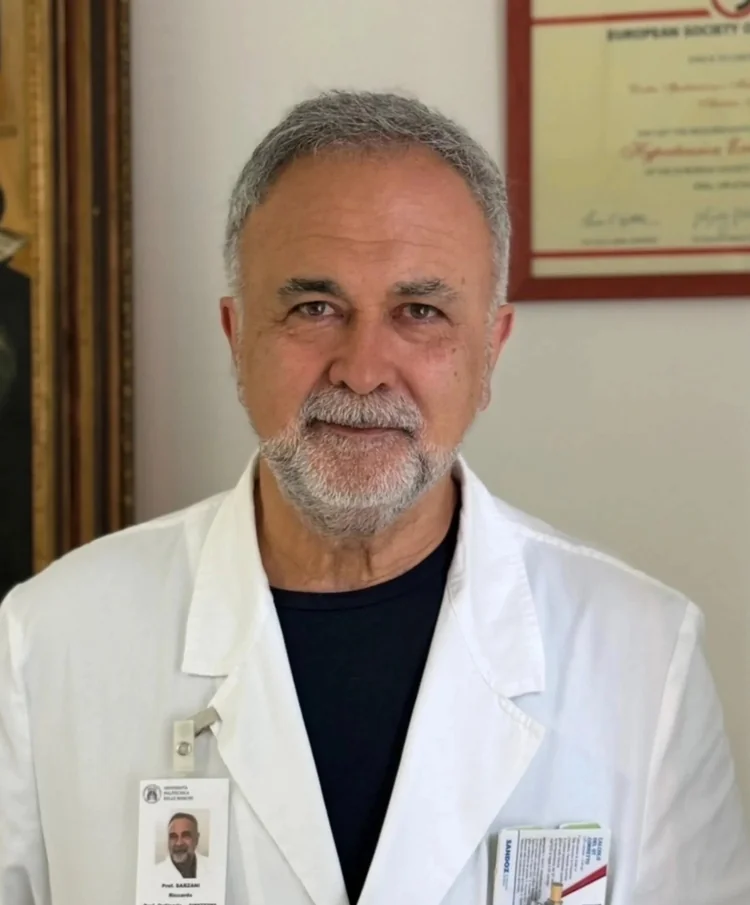
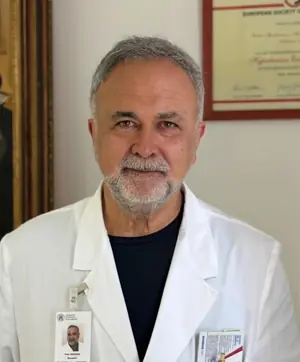 Prof. Riccardo Sarzani supports Medyca as scientific adviser in building the cardiometabolic assessment. Full Professor of Internal Medicine at the Università Politecnica delle Marche and a specialist in cardiology, he directs the Clinica Medica e Geriatrica of the IRCCS INRCA in Ancona and the Marche Region reference centre for arterial hypertension and cardiovascular diseases, a Centre of Excellence of the European Society of Hypertension. He is the author of about 200 scientific publications on hypertension, obesity and metabolic syndrome. He is also currently president of the executive board of the Marche section of the Società Italiana dell'Obesità.
Prof. Sarzani and Dr Stella work with Medyca to extend the Bioidentical Hormone Pathway's assessment of cardiovascular risk.
How it fits into the Bioidentical Hormone Pathway
The cardiometabolic assessment is part of the Bioidentical Hormone Pathway: it does not replace it or interrupt it; it completes it. Dr Lenzi remains your main doctor for hormone therapy; Dr Stella takes care of the metabolic and cardiovascular profile. Two specialists, two distinct responsibilities, one coordinated pathway.
Hormone therapy is not a therapy for weight or for blood pressure: this assessment is the part of the picture that hormone therapy does not cover. From the perspective of a 360° women's health pathway, the cardiometabolic assessment completes the Bioidentical Hormone Pathway on the metabolic and cardiovascular side, further maximising its benefits in terms of health and longevity.
How to proceed
- The pathway begins with hormonal rebalancing or, when hormone therapy is not indicated, with being taken on as a patient without hormones. During follow-up visits, if your clinical picture requires it, Dr Lenzi offers you the cardiometabolic assessment.
- If you are still considering the Bioidentical Hormone Pathway: Discover the Bioidentical Hormone Pathway
Frequently asked questions
1. Can I have just the cardiometabolic assessment?
No: it is part of the Bioidentical Hormone Pathway, which begins with a 360° assessment of your health. If hormone therapy is not indicated for you, we still look after you, without hormones. In both cases, during follow-up visits, if the clinical picture requires it, Dr Lenzi offers you the cardiometabolic assessment. It is designed for those who want to take care of their health over time, not as a shortcut to losing weight.
2. Who decides whether I should have it?
Dr Lenzi, during the follow-up visits in the Bioidentical Hormone Pathway, on the basis of your clinical picture. Access depends on medical suitability.
3. Do I need to have tests before the visit?
Yes. At the follow-up visit where she offers you the assessment, Dr Lenzi prescribes the necessary tests and gives you the sheets for blood pressure and the food diary. The visit is built on that data, so it comes when the picture is complete. You can have the tests done wherever you prefer.
4. Is it a weight-loss programme?
Not exactly. It is above all a medical assessment of the metabolic and cardiovascular profile to improve your health in the long term. Weight is one of the parameters, not the only goal. You may receive dietary and lifestyle advice from the dietetics specialist, alongside drug therapy, because losing weight leads to numerous cardiometabolic benefits and also improves general wellbeing and secondary aspects such as joint and muscle pain.
5. How is waist circumference measured?
With a tailor's tape measure, directly on the skin, at a point just above the navel, not where we wear a belt. That number, divided by your height in centimetres, is one of the simplest and most useful indicators we have: above 0.5 it indicates visceral obesity, even in those who are only overweight. Before the visit you also measure your hips and neck, in addition to weight and height: the sheet you are given explains how.
6. How should I measure my blood pressure at home?
Two readings in a row, 1–2 minutes apart, twice a day (morning and evening) for at least three days, ideally seven; if you cannot manage that, even once a day for a week will do. The sheet you are given explains how to do it. It is not a bureaucratic detail: a week of readings at home says something that a single reading at the practice cannot say.
7. What do I write in the food diary?
What you eat for seven days, together with a short food questionnaire. Seven normal days, not seven days better than usual: it is there to show your real habits, and it is the only way for the specialist to work with you and not with an average.
8. Why are indices such as waist/height or triglycerides/glucose used?
Because they give a lot of information at almost no cost. The body mass index does not say where the fat is located, which at this stage is precisely what matters; the waist/height ratio suggests it with a tailor's tape measure. In the same way, the TyG index, which is calculated from the values of triglycerides and glucose using a formula, is a simple indicator of insulin resistance, which would otherwise require blood glucose and insulin to be measured together. They are tools for orientation, not diagnoses.
9. Are visits online or in person?
Visits with Dr Stella take place online.